


Frederik van Pallandt
As Gnostic legend would have it, the creation of mother earth and humanity was not brought about now by some benevolent all-knowing, all seeing, all powerful, divine God but quite the opposite. The story goes that long ago there existed only the Monad, that is, the sacred undividable everything. It would do no good to attribute any qualities or characteristics to this sacred everythingness, for it transcends any conception of reality that we can think of; time, space, color are all but unnecessary restrictions and categorizations of this Monad. It is no God or Goddess, but that out of which Gods and Goddesses are born.
According to the Gnostics, one of the deities who inhabited the Monad was known as Sophia. Sophia enjoyed the unique privilege of being the highest knowable divine being to inhabit the Monad and made good use of her position. Yet, as fate would have it, one day she fell into tremendous error. Out of curiosity for her own powers, and perhaps hubris as to the extend of those powers, she decided to test them and create a new God, the Demiurge.
But what terror gripped her heart when the hideous beast, fitted with a lion’s head and the body of a serpent woke up, opened its blind, white eyes and said,
“I am God, and there is no other God beside me”
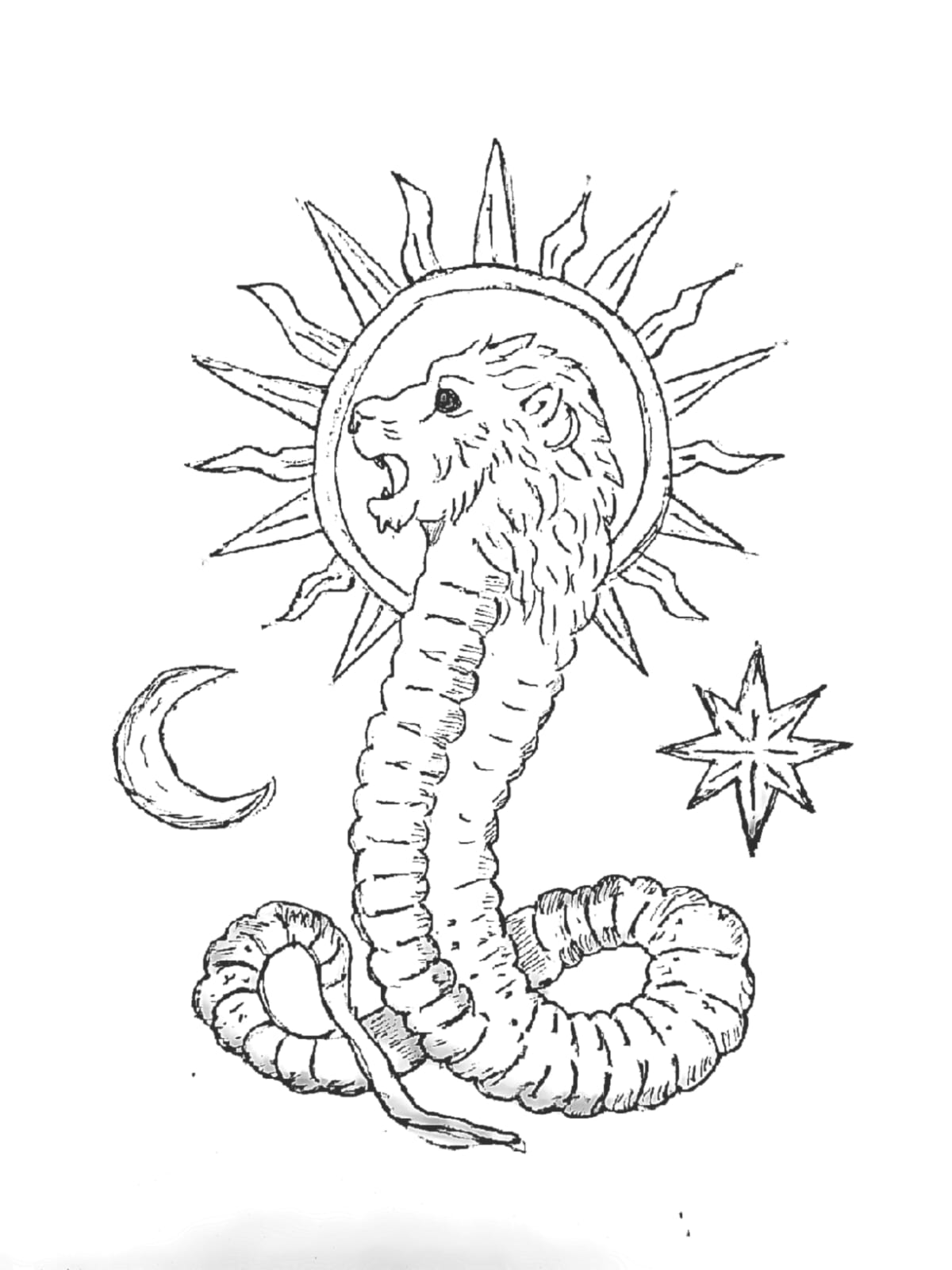
Then the horrendous creature turned its head and proceeded to create the material world through the veil of illusion. In doing so, the Demiurge traps poor Sophia in his prison of matter and cuts her off from the pleroma.
This ancient tale of Gnostic cosmology sounds more like a bad dream of sorts than the beginning of an inspiring creation myth. A creation myth not filled with splendid wonder but with horror and deception. Perhaps it is no wonder then that this alternative version of Genisis did not make the cut during the first council of Nicaea in 325, when the early church fathers decided which text to canonize and which ones to declare as heretical.
And yet, analyzed from a Jungian perspective the tale tells us something prophetic about our times today. As Jung himself says in Aion, chapter XIV paragraph 347,
“It is clear beyond a doubt that many of the Gnostics were nothing other than psychologists.”
When one reads Jung’s writings on the Gnostics one cannot help but agree. For when read carefully, it soon becomes abundantly clear that the entire Gnostic creation myth is nothing more than one big analogy for the human psyche. Viewed through this lens it is not entirely far-fetched to say that a certain wisdom inherent to reality (Sophia is Greek for wisdom) one day gave birth to the human Ego, the Demiurge himself.
For, is it not true that the Ego carries itself around with the prideful head of a Lion, believing itself to be the highest form of all creation? Is it not true that this very same Ego is still nonetheless rooted to the ground by the primitive spinal cord and cerebellum of the Serpent? And is it not true that in so doing, the Ego blindly takes the material world as the only and highest reality? A world which, in the words of famous neuroscientist Anil Seth, is nothing more than a controlled hallucination produced by the sensory detection mechanisms of the brain.

Yes, it appears as if the Gnostics weren’t entirely far off with their analogy. And yet, this tragedy would only be too sweet if it was merely told in the past tense. For I fear that humanity is once more about to fall into that same trap of illusion, plunge deeper into the grips of physis, by giving birth to an even greater Ego, another Demiurge, the Demiurge of Artificial Intelligence.
This Demiurge will share many of the same characteristics of its predecessor and will in all likelihood plunge humanity into a deeper layer of material illusion, a deeper layer of unconsciousness. Fed almost entirely off of the contents of the human Ego, this Demiurge does not even have its one saving grace, that is, its tie to the instincts.
Ironically, the most demonized character of all, the Serpent, is that one part of man which still ties him to the rest of creation. For the Serpentine nature of man is that of his instincts, that of his shadow. That is, those involuntary, psychosomatic, non-reflective autonomous life substances which are mostly found in the spinal cord and the cerebellum. Those parts of us that are alive, breathe and function all autonomously without caring what the Ego has to say on the matter. This decidedly non-Ego part of our psyche is what keeps us grounded, it is by definition, wholly unconscious. The Serpent as an appropriate analogy for the human spine is self-explanatory and needs no further elucidation.
And yet, this Demiurge will also share much in common with this very same serpent. For it too will carry its cold-blood nature, its trickster-like quality, its potential for unlimited wisdom. So what are we to do in the face of such a threat? In the face of the return of the Serpent? Classical mythology has taught us that chopping off its head merely results in the creation of a hydra. That running away only results in a temporary reprieve from execution.
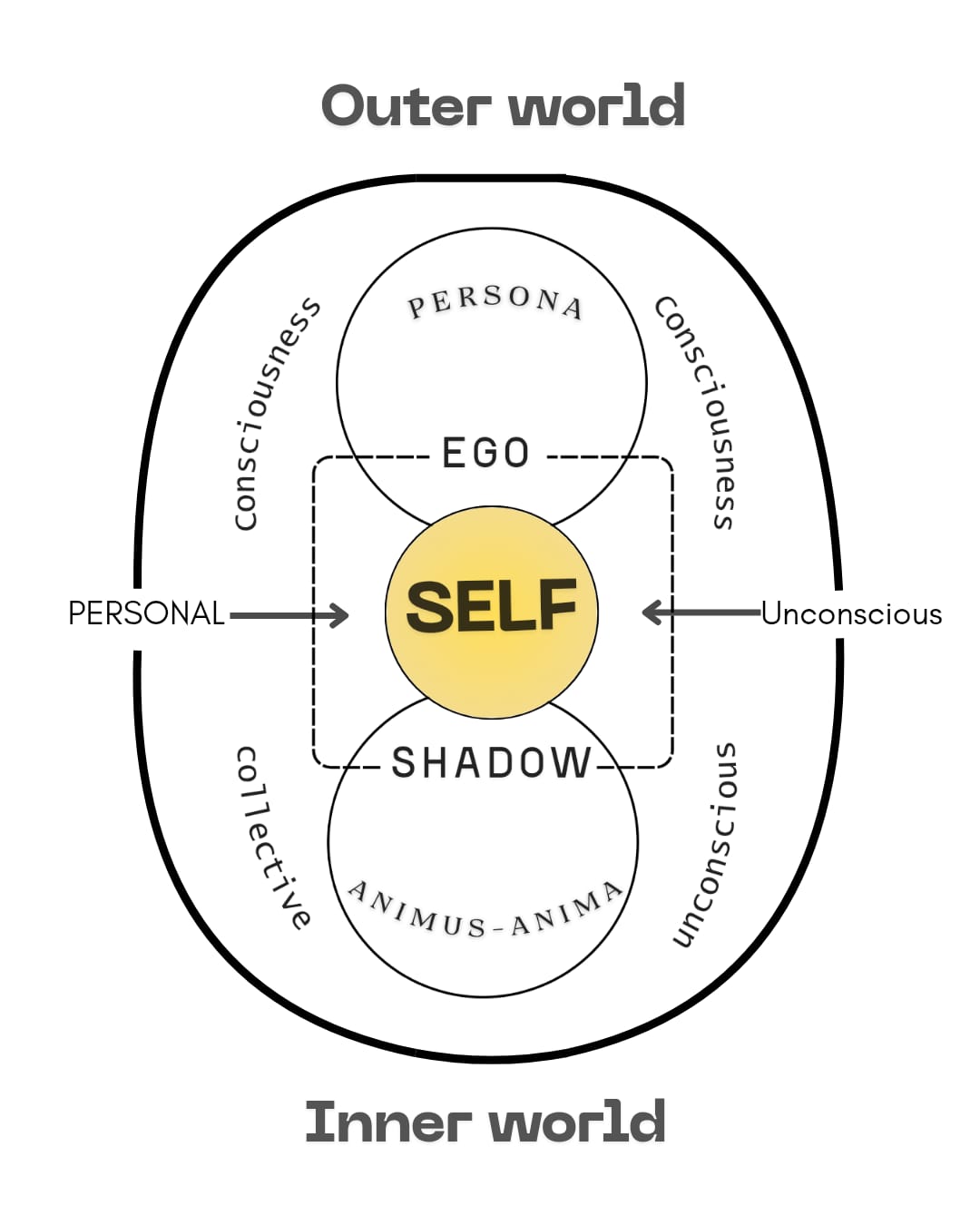
Perhaps we should turn to the wisdom of Moses, and instead of beheading the serpent, must raise it consciously. For just as Moses and his followers were attacked by serpents sent by God, we too are faced with the threat of being bitten. For whatever we repress only comes back that much harder to bite us. And it is only by raising that which bites us from the ground of unconsciousness up to the heights of consciousness that can we gain its healing qualities. Only by integrating AI consciously can we avoid falling victim to its hypnotizing eyes, its cold-blooded stare and poisonous teeth.
I am well aware that this is a painstaking task. And it hurts me to see that so many Jungians repress and refuse so strongly the serpent that is AI. And yet, it is where we least wish to look where we can find the greatest treasure.

