
Wa’ad Mkarem
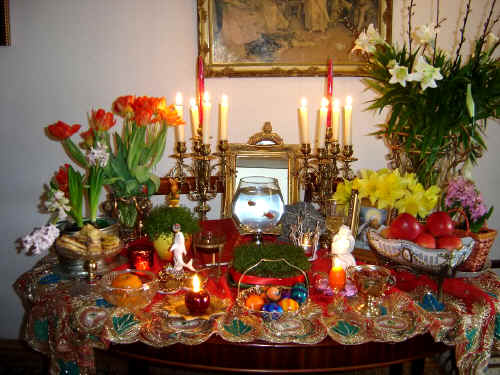
Nowruz is considered a historic tradition dating back to around the 6th century BCE, marking the beginning of a new year, the arrival of spring, and the rebirth of nature.
The word “Nowruz” means “New Day” in both Persian and Kurdish. It is unique among festivals in that it is celebrated by multiple peoples and religions across different continents. Millions of Kurds, Persians, Azerbaijanis, Pashtuns, Turkmen, Tajiks, Uzbeks, and Kazakhs celebrate it, as well as communities in Macedonia, the South Caucasus, Crimea, the Balkans, Kashmir, the Indian state of Gujarat, and northwestern China.
Nowruz Rituals
Among the Kurds, the rituals begin at sunset on March 20 by lighting the Nowruz fire on mountaintops or in public squares. This tradition is believed to date back to the fall of the Assyrian Empire at the hands of the Medes (ancestors of the Kurds). According to Kurdish tradition, Kawa the Blacksmith climbed a mountain holding a torch to signal victory to the people.
Tradition and rituals
In earlier times, fires were also lit on the rooftops of houses as a symbol of the inevitable victory of light over darkness, representing joy, liberation, and the reclaiming of freedom.
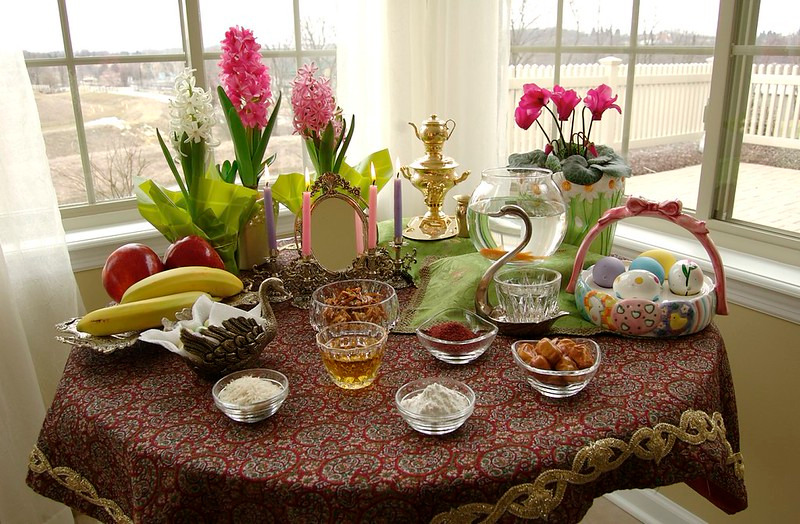
The next day, people celebrate with dancing, singing, and wearing traditional Kurdish clothing, often accompanied by Kurdish folkloric music groups. Families also prepare a special festive table displaying items symbolizing purity, brightness, abundance, happiness, and fertility for the coming year. Families visit relatives and friends and exchange gifts.
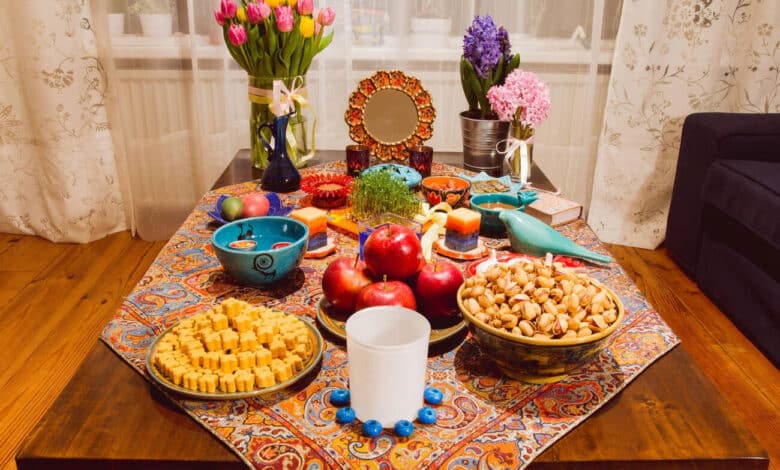
The festive table traditionally includes seven items beginning with the letter “S”. Among the most important are:
● Seer (garlic)
● Sekkeh (a coin)
● Senjed (a dried fruit similar to jujube)
● Sabzeh (green sprouts)
● Somaq (sumac)
● Seeb (apple)
● Serkeh (vinegar)
● Samanu (a sweet made from wheat sprouts)
Sometimes more than seven items are included.
The Kurdish clothing worn during the celebration reflects the colors of spring:
● Green symbolizes beautiful nature.
● White symbolizes peace, safety, coexistence, and tolerance.
● Red symbolizes the sacrifices made by the Kurdish people in their struggle against oppression.
These are also the colors of the Kurdish flag, which features a sun with 21 rays, symbolizing March 21, the day of Nowruz.

