


An Initiated’s Guide to Jung’s Aion: Gnostic Symbols of the Self
By Frederik van Pallandt
Foreword
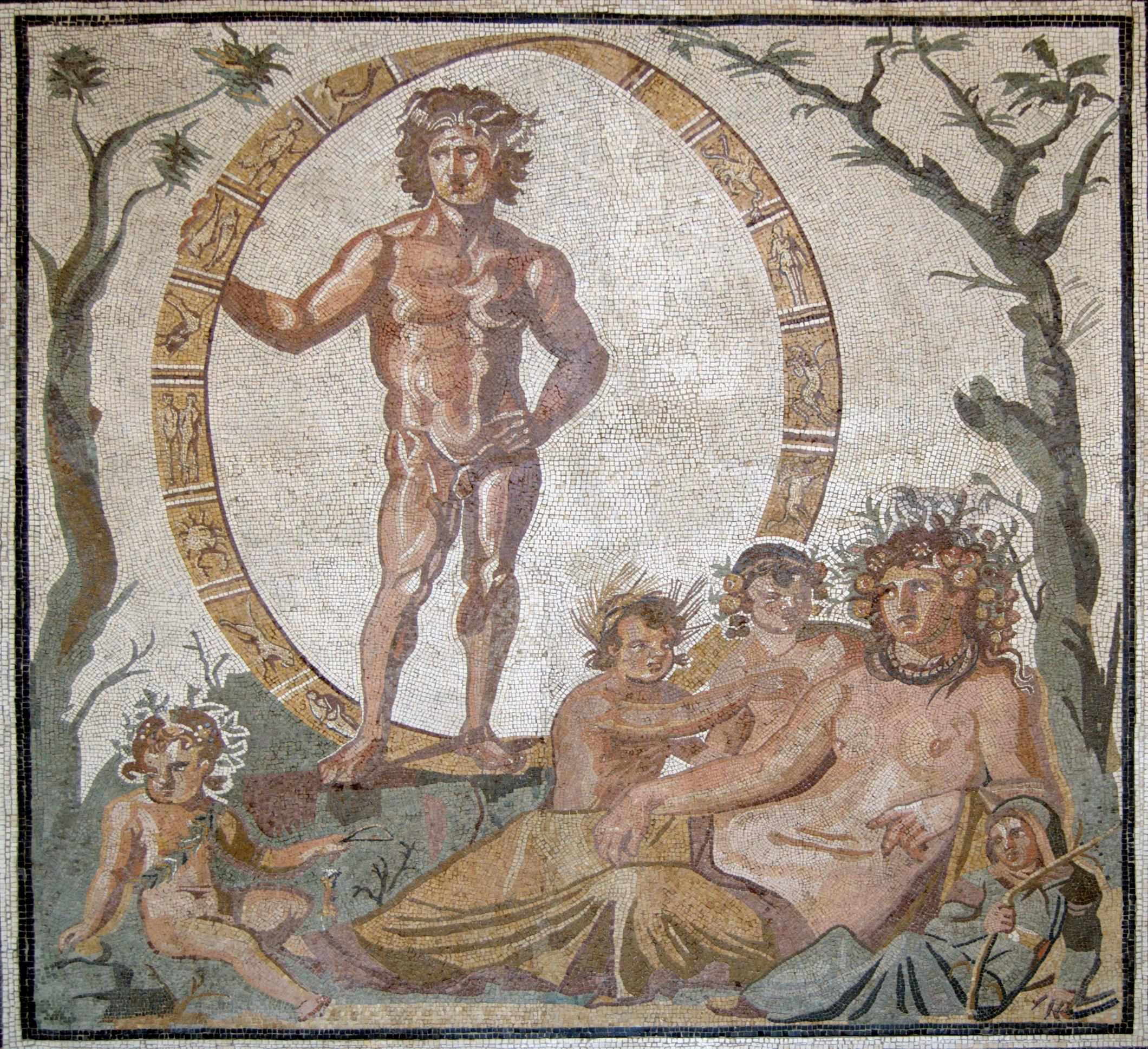
After having dabbled in some of the works of Carl Jung for a while now, having read attentively Man and His Symbols and Archetypes and the Collective Unconscious, listened to a podcast here and there and watched the occasional YouTube-lecture on his teachings, I finally decided to embark on arguably Jung’s most notorious work, Aion: Researches into the Phenomenology of the Self. For quite some time now I had been eager to read this enigmatic mystery, which allegedly contained the beating heart of all of Jung’s teachings. However, for an equally long period of time, I had dreaded the idea just as much and had refused to read even a single page, despite the fact that I had owned a copy for well over six years.
This was due to the fear that had been evoked in me after having read and heard of all of the stories, rumors and even legends surrounding the book. Some have proclaimed to have suffered from night-terrors during, and long after having read Aion, others claim that it had thrown them into a state of shock from which they still haven’t fully recovered from. However, what I feared most, was the warning that Aion had the distinct ability to induce psychosis. All of these rumors I had always taken very seriously.
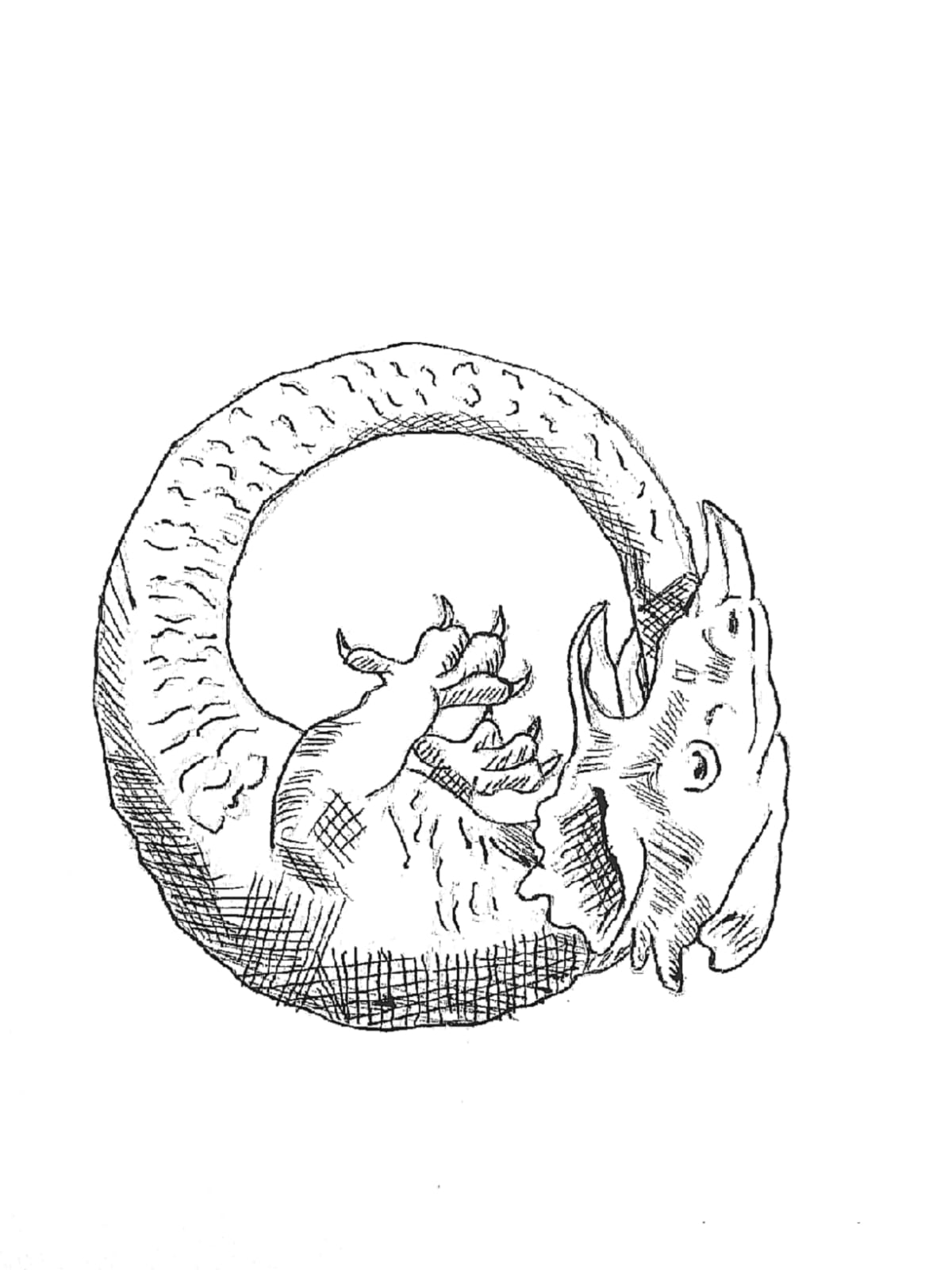
The numinous quality surrounding the book strongly reminded me of the beginning of the movie The Never Ending Story, where the main protagonist, a young boy named Bastian, encounters a stuffy, old man reading a mysterious book, decorated by a representation of the alchemical Ouroboros on the cover. Bastian carefully approaches the old man and enquires as to what he is reading, to which he replies, “Oh, this? This is a special one. See here, the books you read are safe, after reading them you go get to be a little boy again.” Bastian reacts surprised and asks him; “And the one you are reading isn’t safe?” The old man slowly turns to him and dismissively whispers; “Don’t worry about it.” This interaction had always struck me as haunting and intriguing at the same time. The very idea that there existed a book which was “unsafe” enough to step over the threshold of reality “into our world” seemed to me exciting yet disturbing. If there ever was such a book, Aion would be its name. So, like Bastian, despite the warnings, or perhaps because of them, I gathered all of my courage and read the book.
I shall not go into extensive detail here how Aion has affected me. That is a strictly personal question that I would rather answer and discuss in private. However, to satisfy my readers’ curiosity regarding all of the myths and legends surrounding Aion, I can assure them that they are all absolutely true. Aion has induced night-terrors and nightmares, it has on multiple occasions thrown me into great shock and above all, it has induced psychosis. However, let it be known, that for the courageous soul no greater adventure into the Self awaits.
Introduction
Before I commence, a few clarifying words might be in order. The very idea of writing this essay was born out of my tremendous struggle to fully grasp what Jung was saying in this seminal work. In the past I had had read some of his other works such as Man and His Symbols and Archetypes and the Collective Unconscious with a certain degree of passivity. That is, I would read the text, try to understand what was being said, re-read certain passages when necessary and made the occasional google search whenever I felt like it. This worked just fine with Man and His Symbols, as the book was written for a wider audience and therefore required no great toil on my part. Regarding Archetypes and the Collective Unconscious my passive approach started to seem sub-optimal but still adequate enough to extract the necessary value. However, once I approached Aion my lax attitude failed miserably. This became only all too evident to me after I had read over half of the book yet still struggled to fully explain to my friends and family what the book was truly about. In fact, I even failed to explain most of it to myself.
Don’t get me wrong, it wasn’t necessarily so that I didn’t understand the work at all, but more so that the book forced me to dig deeper to fully appreciate its meaning and depth. This is despite the fact that I had re-read almost every chapter more than two, three and in some cases over four times. Once merely re-reading certain passages proved to be no longer sufficient, my google searches became more extensive, I dug deeper. But it was only once I had reached the chapter concerning “Gnostic Symbols of the Self” that I really felt the need to write a supplementary text in order to keep track of the flood wave of esoteric and obscure knowledge that was being washed over me. At first this document too was quite marginal. But soon, as if by magnetic attraction, the attentive study of the text drew me in, deeper and deeper, until I ended up with the twenty-one-page text which sits in front of you now. A text, which only covers the first sub-chapter of “Gnostic Symbols of the Self”. Mind you, the original sub-chapter which we shall cover in this essay is but six pages long. My 21-page elaboration on these 6 pages can therefore either be seen as a great testament to the density by which Jung writes or to my own incompetence.
Now, as to the essay itself, I have attempted to provide my reader with an extensive commentary and supplementary analysis on the first sub-chapter in Aion concerning the “Gnostic Symbols of the Self”. I have done this by supplementing the text with additional research on the historical, alchemical, Gnostic, scholastic and archetypal themes that present themselves throughout the chapter, as well as provided my reader with images and additional thinkers that aren’t mentioned by Jung. To help my reader keep track of the multitude of terms that are employed throughout the essay, I have either underlined or italicized them. I recommend reading this essay alongside the appropriate chapter in Aion. However, this isn’t strictly speaking a necessity, for I have covered virtually every sentence and idea presented in the chapter and have elaborated on them extensively.
Furthermore, I highly recommend my reader to have done some preliminary research on Jung’s theories beforehand. For many of the terms and concepts that I shall be employing throughout this essay shall not be further elaborated upon with the implicit assumption that the reader has already familiarized themselves with terms such as Anima, the Shadow and the Process of Individuation. Considering that Aion is an extensive inquiry into the Archetype of the Self, I do not expect my reader to have familiarized themselves with this archetype as of yet. Nor shall I expect my reader to fully understand the significance of obscure symbols such as the “the Magnet” or “the Stone” which will also play a significant role throughout this essay. I will try my best to elucidate these symbols as we go on. Just keep in mind that their significance will only become more apparent as the essay develops itself. For it takes an essay to grasp even their surface level meanings. At the very least, my reader will get a glimpse of how I approach Jung. So, without further ado, I present to you An Initiated’s Guide to Aion, Gnostic Symbols of the Self.
“Alchemy owes its real beginnings to the Gnostic systems, which Hyppolytus rightly regarded as philosophic, and which, with the help of Greek philosophy and the mythologies of the Near and Middle East, together with Christian dogmatics and Jewish cabalism, made extremely interesting attempts, from the modern point of view, to synthesize a unitary vision of the world in which the physical and the mystical aspects played equal parts. Had this attempt succeeded, we would not be witnessing today the curious spectacle of two parallel world-views neither of which knows, or wishes to know, anything about the other.”
Carl G. Jung
Clarification of some basic concepts
For all those unfamiliar, Gnosticism was one of the first Christian movements which attempted to create a coherent doctrine around the early faith, going as far back as the first century. These early Christian sects used a large variety of symbols, ideas and practices that had already been used by earlier belief systems and had borrowed directly from Jewish, Roman, Greek and even Egyptian religious and mystical doctrine. According to Jung, Gnosticism was therefore a product of cultural assimilation between various older belief systems and Christianity and therefore extremely interesting in understanding contents and prophesies relating to The Redeemer, also known as Christ.
It is here where we must already carefully introduce the psychological concept of the Archetype of the Self, if we wish not to be misunderstood. This essay is about understanding the psychological significance of certain symbols and ideas found in religious texts. Therefore, when I refer to Christ or any other spiritual, religious or mythical entity, I am not making any ontological claims or confessing a particular faith. I am simply noting the psychological significance of such symbols. In relationship to the topics and ideas I will be covering in this essay, it is incredibly important to form a basic understanding of one symbol in particular and that is the Archetype of the Self. To put it simply, the Self can be understood as the union between above and below, conscious and unconscious mind and symbolizes the incorporated synthesis of the two. One ought to think of the Self as the higher (or deeper) personality which lurks within. A personality, which is frequently projected onto figures such as Christ or the Buddha and transcends ego-consciousness in importance and significance. This archetype occasionally makes its appearance in the dreams, visions and spontaneous thoughts of an individual during times of psychological re-orientation or disintegration and can serve as a “savior-like” figure. In contrast to the other archetypes, the Self functions as the center of the psyche around which all other concepts revolve. While reading this text, it is important to keep in the back of one’s mind that Christ is such a symbol for the Archetype of the Self. Therefore, every reference to Christ, the Savior, the Redeemer, the Son or the Anthropos should be read as a reference to the archetype. With this in mind, one shall have an easier time grasping the deeper symbolic layers that we shall cover.
In the first chapter, Jung starts off by mentioning a 3rd century text, named the Elenchus[3], written by a certain Hippolytus of Rome. At the time, Hippolytus was bishop of Rome and is considered to be one of the most important 3rd century Christian theologians and church fathers. In The Elenchus, Hippolytus describes certain Pagan and Gnostic beliefs that were considered to be heretical at the time by the Catholic Church[4]. Keep in mind that in the 2nd and 3rd century we still don’t have a unified and formalized Christian doctrine. In 250, Christians were still actively being prosecuted by Rome and in 251 there was even a schism in the early catholic church. To illustrate how small Christianity was at the time, consider that only 10% of the inhabitants of Rome identified themselves to be Christian by the dawn of the 4th century.
Besides the Gnostics, the Roman Church also had to fend off other rival sects of early Christianity. Movements such as Marcionism, Montanism, Docetism or Psilanthropism all made their own claims to the Apostolic Teachings as well. The divided nature of early Christianity would continue until the First Council of Nicaea held in 325. The council, which had been set up by Constantine I, served as the first of many efforts to attain consensus within the church as to what the formalized and unified doctrine of Christianity ought to be. In the 3rd century however, there was still a fierce competition between rivaling Christian sects and groups which all claimed to have the correct interpretation of the Apostolic Teachings. Therefore, the stamping out and declaring heretical of all Christian believes that deviated from the early Catholic Church was considered to be necessary at the time to provide the religion with a coherent structure and formalized doctrine. Ironically enough, however, the Elenchus is one of the few reliable sources remaining today which describes the doctrines of some of these sects now lost to history.
Now Jung notes, that just like in the Alchemical teachings of the Middle Ages, the connection between the Magnet and Iron can yet again be found in the doctrines of three different Gnostic sects documented in the Elenchus. That is, in the religious doctrine of The Naassenes, the Perates and in the doctrine of the Sethians. For those not familiar with the significance of the Magnet of Alchemy (more commonly known as the Philosophers Stone), don’t fret. The meaning of this symbol shall be further elaborated upon. For now, it is only important to know that the Magnet has an attracting quality which has the tendency to “draw one in”. Jung starts off by describing the symbolic significance of the Magnet found in the doctrine of the Naassenes;
1. Beliefs of the Naassenes sect found in the Elenchus
“The four rivers of paradise correspond to the eye, the ear, the sense of smell and the mouth.”
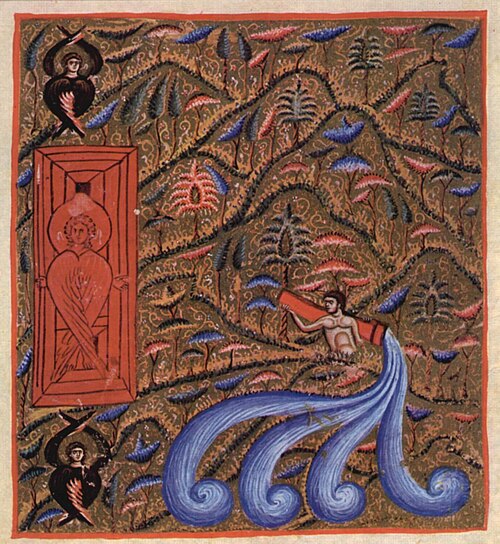
This quote found in the Elenchus is a direct reference to Genesis 2: 10-14 in which it is described that a river flowed from the Garden of Eden and separated into four headwaters. The four rivers motioned are the Pishon, Gihon, Tigris and Euphrates respectively. In the Elenchus, the Naassenes attribute a sense to each river. It is interesting to notice that the senses described are all exclusively located in the head. Other senses such as touch for example can be found elsewhere in the body, but are not mentioned. Now, notice how it is described here, that the mouth is the fourth river of paradise and therefore significant as it makes a triad into a quaternity and thereby making it into a “whole”. Here, the significance of the number four in relationship to wholeness is brought up, a prominent theme in Jungian psychoanalytic theory. This fourth river is interpreted by the Naassenes as being the Euphrates. This will be brought up again later, so it is important to keep in the back of one’s mind.
In addition to the significance of being the fourth, the mouth is also significant, for food goes in while prayer comes out. This is in contrast to the other senses which only take in. In other words, that which makes a triad into a quaternity and therefore that which is incomplete complete, is that which is able, not only to take in, but also to let out. Not too long ago, I had come to a similar conclusion myself. One of the most crucial steps in the Individuation Process is not only to consume that which is good for you, but also to give expression to that which lurks within. The soul must be fed, true, but should also be given the ability to speak. Therefore, one can think of “expression” as a necessary precondition for wholeness. One should also to think of the association that the mouth has with regards to the Logos. It is the mouth, the Logos, that makes three into four and completes that which is incomplete. Due to its ambiguity, the significance of the Logos shall be further elaborated upon later in the text.
Here a reader of Jung must remain patient. Many of the ideas, references and meanings that one encounters in Jung, such as the passage about the four rivers of paradise mentioned above, can only be understood by carefully analyzing what I call “historical anecdotes of the unconscious”. As one can see here, the symbolism found in the text only slowly becomes apparent by deeply meditating on its meaning. In order for a fuller picture of these ideas to emerge, one must let themselves be patiently exposed to a whole series of these “historical anecdotes of the unconscious” and only then will one slowly learn its unique language. We commence.
Beliefs of the Naassenes sect found in the Elenchus:
“This is the water above the firmament, of which the Savior spoke:
This is the water above the firmament, of which the Savior spoke: “If you knew who it is that asks, you would have asked him, and he would have given you a spring of living water to drink.” To this water comes every nature to choose its own substances, and from this water goes forth to every nature that which is proper to it, more than Iron to the Heraclean stone.
Let us break down step by step what is being said here. First of all, it must be noted that the “every nature” of which is spoken of in the text is the individual. It is the individual who has to choose its own substances through the water of which the Savior spoke of, but also the individual who gains “that which is proper to it” from the water. So, there seems to be a dynamic at play here between the free choices that an individual makes, and a receiving of “that which is proper to it”. In other words, between a choosing and receiving filtered through the water.
Of course, as any reader of Jung knows, water is one of the most universal symbols for the Unconscious and therefore carries special significance. Jung writes:
The unconscious is often figured as a great body of water, either as a sea or lake. Just as the sea is the mother of all life, so the unconscious is the source of all conscious psychic life.
Therefore, it is the individual who is led on by the Savior (the Archetype of Self) to choose from the water (the Unconscious) its own substances.
The Heraclean stone mentioned here is nothing more than the Magnet. It is said here that the process of choosing and receiving described above, is somehow a similar and even a stronger process than that of the Iron being attracted to the Magnet. The idea here seems to be that there is somehow an attracting force that is evoked by the water from these four rivers of paradise, especially the fourth.
A similar comment on the waters from these four rivers can also be found in John 4;10 which mentions the
wonderful waters of the Euphrates that has the power of the aqua doctrinae which perfects every nature in its individuality and thus makes a human whole by giving them a magnetic power by which they can attract and integrate that which belongs to them.
Yet again, we find the same theme in John 4;10 mentioning a “magnetic power” in reference to the waters of the Euphrates by which one can attract and integrate that which belongs to them. Remember, it was the Euphrates which was the “fourth river of paradise” and which corresponded to the mouth. Here too it is mentioned that the water from this specific fourth river has the distinct power which “perfects every nature in its individuality”. And yet again it does so by providing the individual with some kind of “magnetic power by which they can attract and integrate that which belongs to them”.
Here Jung makes a reference to the aqua doctrinae. A term he borrows from a third century Christian scholar named Origen who noted the symbolism of water in Christian doctrine. Through my research I encountered many such examples noted by Origen which were absolutely fascinating. For instance, after the death of Christ on the cross, his side was pierced by a lance (John 19), after which blood and water came out which was interpreted by Origen as the aqua doctrinae. Notice the symbolism here of water (the Unconscious) coming out of the body of Christ (he Archetype of the Self).
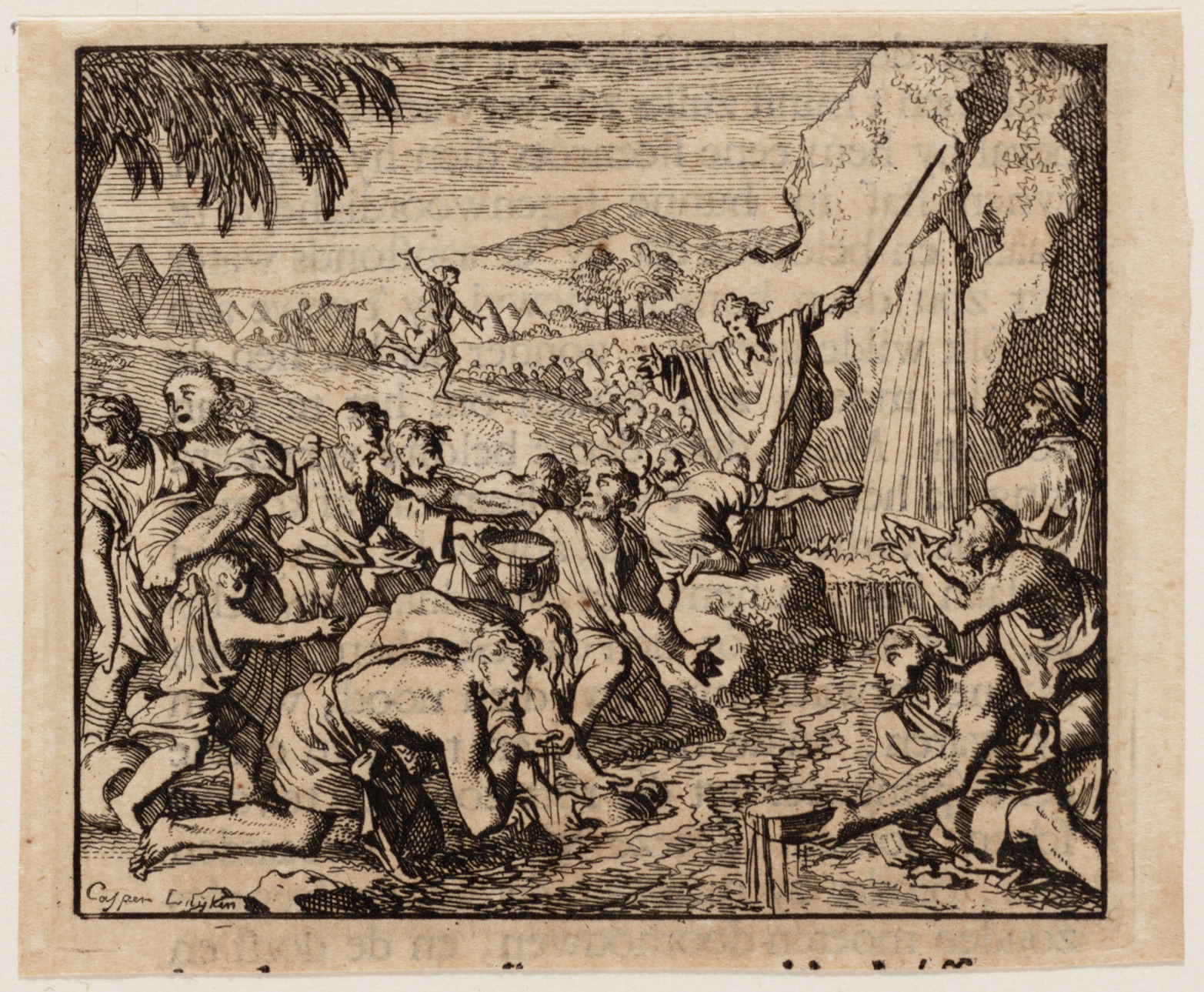
Again, in Exodus 17:6, “Yahweh instructs Moses to strike a rock and water will flow from it for the people to drink.” That water too, was interpreted by Origen as the aqua doctrinae. It is also interesting to notice how in Exodus 17:6 we find another reference to our Magnet, this time coming from the Stone. It is important for my reader to know that the Stone, the Magnet and the Lapis are often used interchangeably in Alchemy and are all better known as the Philosophers Stone, which in turn, isan other symbol for the Archetype of the Self. Just like how water poured out of Christ when he was struck, so too, does water emanate from the Stone when struck.
Recap of the doctrine of the Naassenes
So far, we have discussed the symbolism of water (the unconscious) as having an attractive, almost magnetic effect on the individual. It is through the Savior (the Archetype of the Self) that one is led to the fourth river of paradise (the Euphrates) where they find this “spring of living water”. And it is through a confrontation with this water (the unconscious) that one gains the ability to choose and receive all that which belongs to them. This fourth river which carries the transformative essence is the mouth. It is therefore the allowing of the unconscious to manifest itself through the mouth, that is through expression, which leads one, as if by magnetic attraction to wholeness. As the astute reader might have already noticed, this whole doctrine of the Naassenes is analogous to the Individuation Process described by Jung. It is only by confronting the unconscious and allowing the unconscious to manifest itself through expression which leads the individual to wholeness. Therefore, in the sect of the Naassenes water (the Unconscious) acts like a Magnet[7].
2. Beliefs of the Gnostic sect of the Perates
It is the second mention of the Magnet, found in the Gnostic sect of the Perates, where things start to get even more interesting. For it is here where the infamous Gnostic Serpent makes its first appearance. Beliefs of the Perates sect found in the Elenchus:
The Perates believe that no one can be saved but through the Son, but this is the Serpent. For it was he who brought the “signs of the Father” down from above, and it is he who carries them back again after they have been awakened from sleep, transferring them thither from hence as Substances proceeding from the Substanceless. This, they say, is what is meant by the saying, “I am the Door”. But they say he transforms them to those whose eyelids are closed, as naphtha draws everywhere the fire to itself, even more than the Heraclean Stone draws Iron…. Thus, they say, the perfect race of men, made in the image of the Father and of the same substance is drawn from the world by the Serpent, even as it was sent down by him; but naught else is so drawn.
It was reading passages like these that prompted me to write a supplementary text in the first place. At this point I felt completely overwhelmed by the wealth of symbolic images that Jung was washing over me. Keep in mind, I have only analyzed a page and a half by the time this paragraph makes its first appearance.
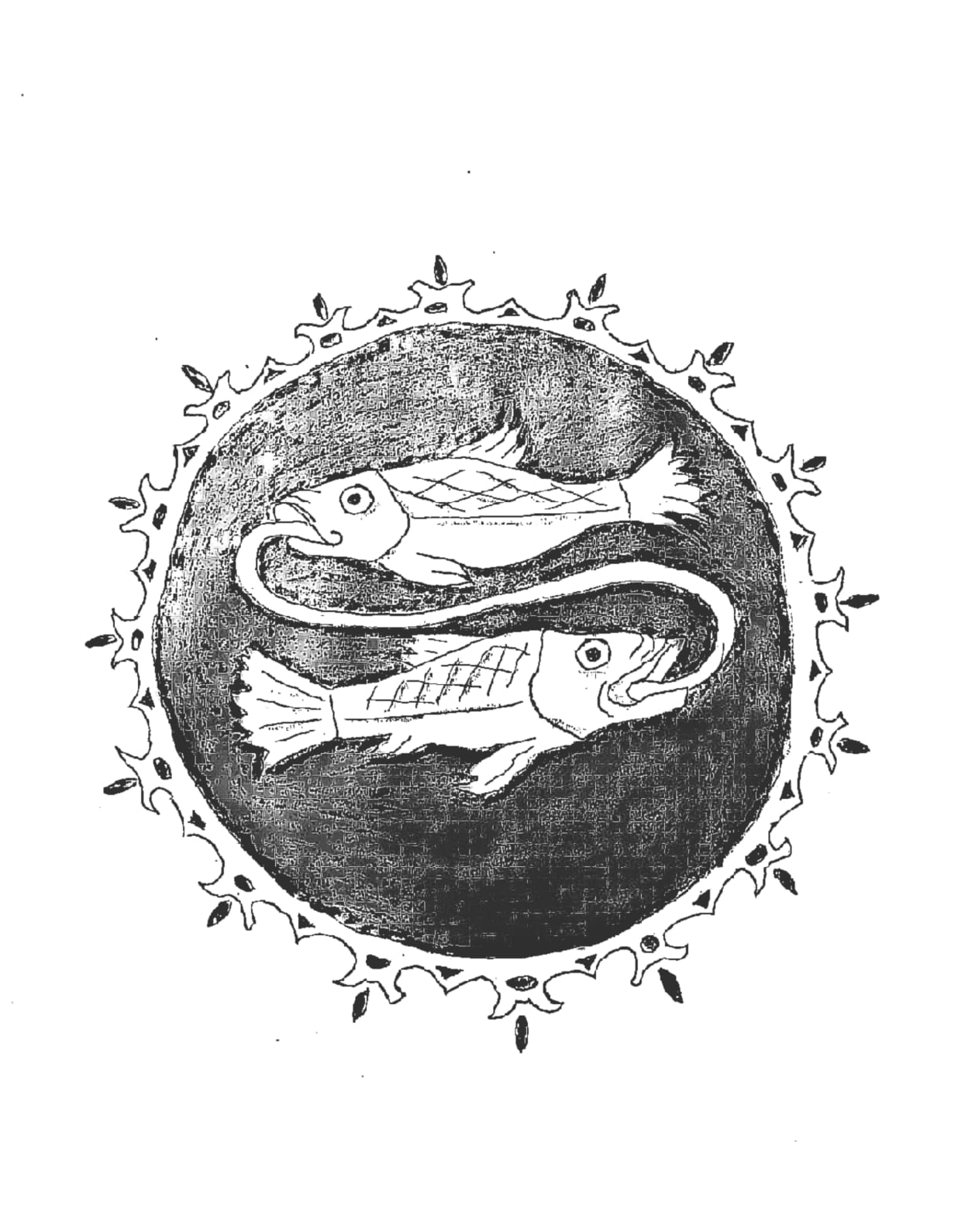
Let’s carefully break this down again step by step. Before even mentioning the Serpent, we must briefly meditate on one of the first comments Jung makes on the passage above. Jung says, “Here the magnetic attraction does not come from the doctrine or the water but from the Son.” In contrast to the Naassenes, where water (the Unconscious) possessed the magnetic-like quality, we find here that it is the Son (the archetype of the Self) who possesses that magnetic quality. The equivocation between Christ and the Magnet is a complex one to say the very least, with a rich symbolic history beginning with the symbol of the Fish. Just like the Magnet, the Fish symbol is also closely related to Christ in various ways and also serves as a symbol for the Self. You see, the Fish is that living, autonomous substance which swims within the waters of the Unconscious and must be drawn up from the depths in order for it to be prepared. The symbolism of the Fish being drawn from the waters (the Unconscious) would later be replaced by the Stone or Magnet as is seen in Exodus 7:6. In any case, it seems that within the doctrine of the Perates it no longer is the vague and undefined waters that possess the distinct magnetic quality but that which is found within the waters. I would like to further elaborate on the Fish symbolism, its relationship to Christ and how it evolved into the Stone/ Magnet. However, a further elucidation of the symbol would require a whole supplementary essay on its own in order to fully appreciate its significance. Therefore, I shall leave it at this for now, just keep in mind that just like the Magnet, the Son (archetype of the Self) has the distinct ability to “draw one in”.
Now off to the significance of the Serpent. Here Jung makes a shocking reference to John 3:14 which reads,
And as Moses lifted up the serpent in the wilderness, even so must the son of mankind be lifted up.
This quote from the New Testament is a reference to Numbers 21:4-9 in which Moses attaches a bronze snake to a pole in order to heal the Israelites who were suffering from snake bites which they obtained while traveling through the wilderness. All who looked upon the bronze snake lifted up by Moses were instantly healed. This is interesting, for it is the confrontation with the elevated snake on the pole which has the ability to heal the Israelites from their very real snake bites which, mind you, were send by God himself. Ironically, it is within the very thing that poisons you where you can find its antidote. Therefore, the Serpent mentioned as in Numbers 21:4-9 has a paradoxical quality to it as that which both poisons and heals.
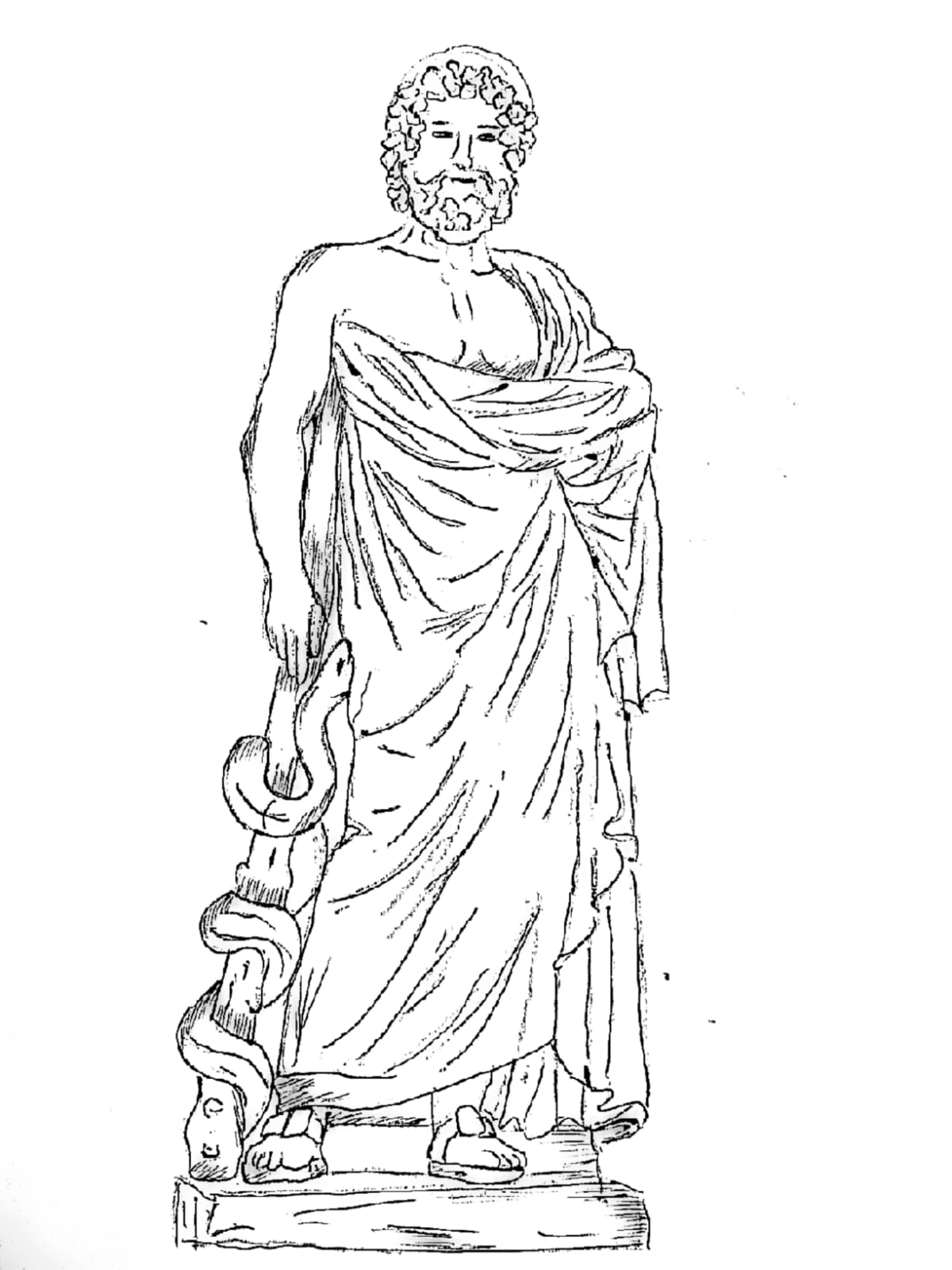
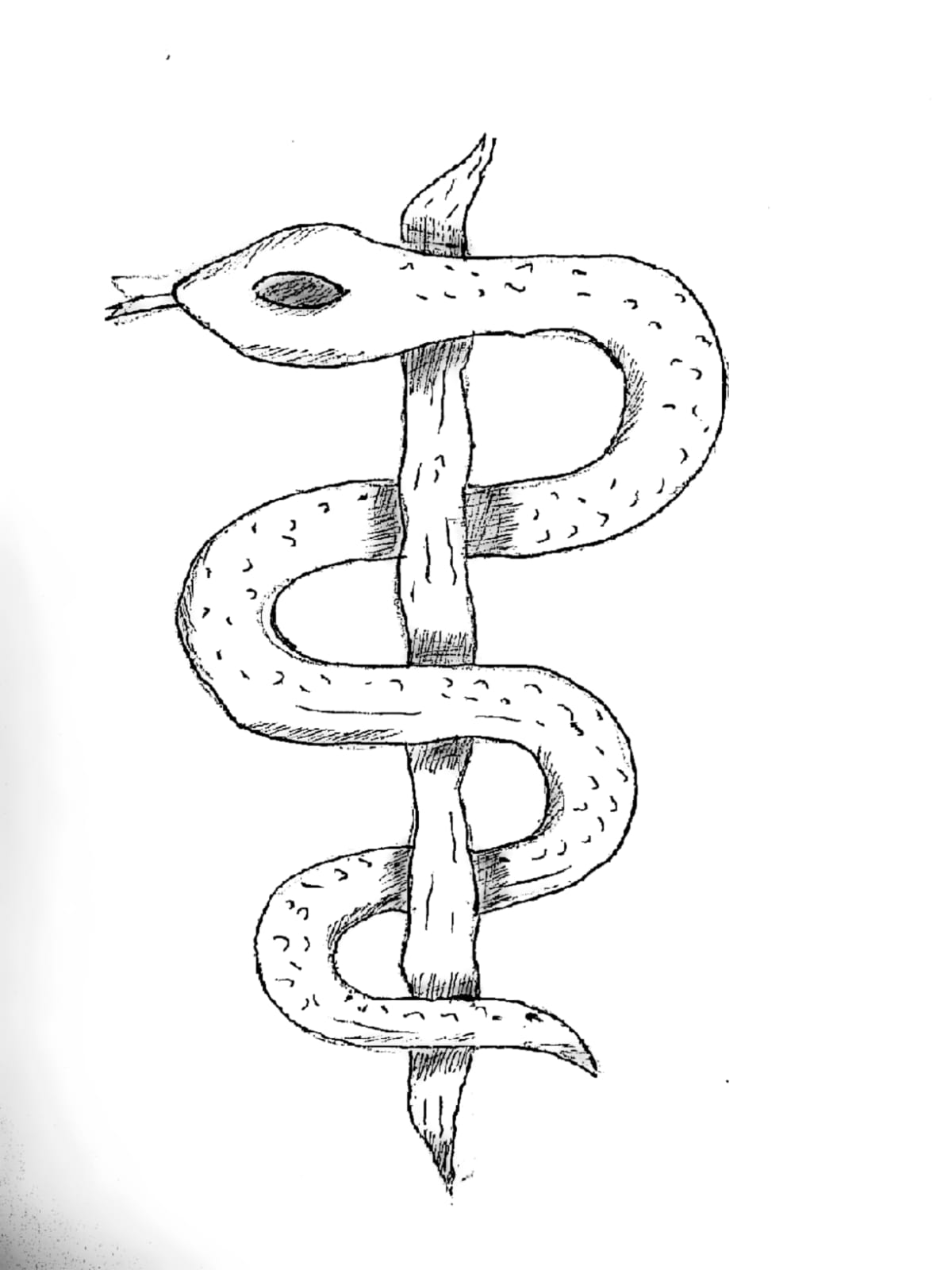
This image of a serpent fastened to a pole immediately makes one think of the Rod of Asclepius, which in contemporary times is depicted as a Serpent winding itself around a rod but has its origins in the ancient Greek deity of Asclepius who was associated with healing and medicine. Nowadays, the Rod of Asclepius is commonly used on the uniforms and logos of hospitals and ambulances and therefore still associated with healing. John 3:14 seems to say that just like the Serpent in Numbers 21:4-9, Christ too must be raised in order for the healing process to commence. Therefore, we must think of the Archetype of the Self as somehow containing a paradoxically poisonous yet also healing quality. Returning to the doctrine of the Perates, we find
For it was he who brought the “signs of the Father” down from above, and it is he who carries them back again after they have been awakened from sleep, transferring them thither from hence as Substances proceeding from the Substanceless.
This is obviously a metaphor for the gaining of consciousness through an encounter with the Serpent. It is through the Serpent that the “signs of the Father” (elements of the Self) are given to us and awaken us from our sleep (the unconsciousness). Through this encounter it transforms us from substanceless (unconsciousness) to substances (consciousness).
Here it might be interesting to note the dual nature of the Serpent as being both the “lowest of the low” and “highest of the high”. There is obviously a strong Shadow quality attached to the Serpent. Let us be honest here, the Serpent is literally a coldblooded, reptilian monster which either suffocates or poisons you. And yet, this is exactly why it has been brought in association with enlightenment. For it is only through a confrontation with the Shadow, that one can reach the Light. “This, they say, is what is meant by the saying, “I am the Door” for in order to reach the Son (the Self) one must pass the Serpent (the Shadow). The theme of the unconscious being described here as “Substanceless” is one that I shall return back to in the second chapter (if I’ll ever write one) and therefore should simply be accepted by the reader for now.
In the sentence, “But they say he transforms them to those whose eyelids are closed, as naphtha[8] draws everywhere the fire to itself, even more than the Heraclean Stone draws Iron” we find the second reference to the Magnet.” the transformative quality which the Serpent brings is yet again referred to as being stronger than the attractive quality that a Magnet has with Iron. Here, Jung argues that just like the Fish, the Serpent is an equivalent symbol for Christ. Christ is a Fish, for he rose from the deep, unknown depths and he is a Serpent for he mysteriously crept out of the darkness. For it is within the darkness that one finds the light.
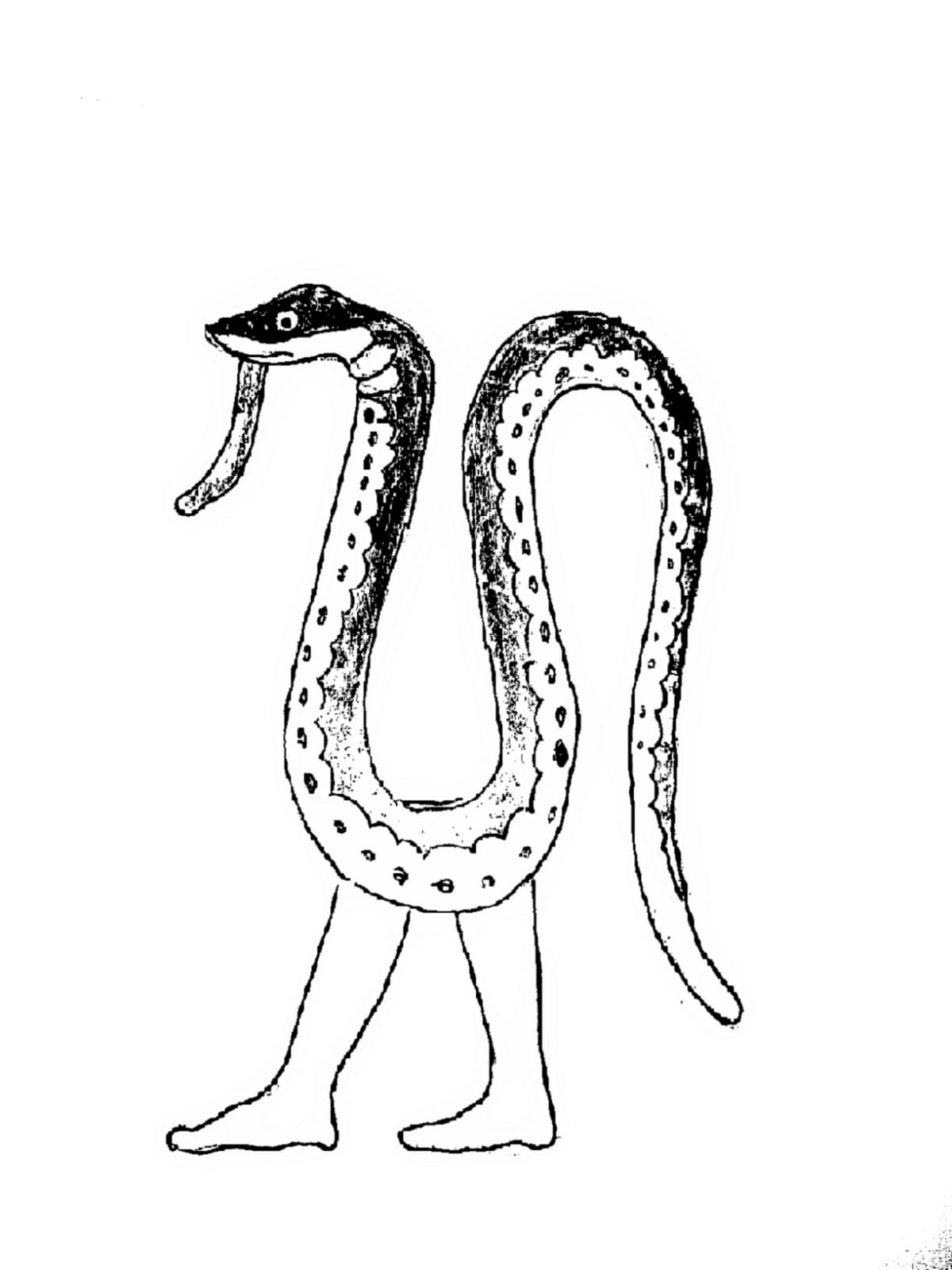
According to Jung, another reason why the Fish and the Serpent are such potent symbols for the Self is because they very neatly describe psychic experiences that suddenly dart out of the unconscious and have a frightening effect on us. Jung argues that one of the reasons why the Perates favored the Serpent over the Fish as a symbol for Christ, was because the Serpent symbol had already been familiar to them in the form of Agathodaimon, who seems to be an obscure ancient Greek deity who was the protectorate and keeper of the wine and grain orchards. Just like Asclepius, he too is symbolized by a snake and has its origins with the ancient Egyptian god Kneph. It is interesting to note here that Kneph was an ancient Egyptian deity who symbolized wisdom and was portrayed as a snake with human legs and an egg in its mouth. Other depictions of Kneph are one where Kneph is being depicted as a winged egg or a globe surrounded by one or more Serpents, coming close to the Alchemical Ouroboros.
Jung argues [in paragraph 291]that animals in general are a welcomed theme of the unconscious, as they express the psychic level of the content in question; that is to say that such contents are at a stage of unconsciousness that are far removed from human consciousness as the psyche of an animal. Animals, be they cold or warmblooded, vertebrates or invertebrates, thus indicate the degree of unconsciousness / consciousness of any given psychic content. Furthermore, Jung mentions that contents of the unconscious can be localized in different parts of the brain and thereby can produce symptoms that impact, not only the psychological condition of the individual, but also have the ability to affect the physiological functions. For example, symptoms produced by the contents of the unconscious could affect the Cerebrospinal or the Sympathetic Nervous System and therefore can look quite different from one another.
The Sethians might have had an inkling to this as well, for according to the writings of Hippolytus they argue that the Father is akin to the Cerebrum (the anatomically larger part of the brain composed out of the Frontal Lobe, the Temporal Lobe, the Occipital Lobe and the Parietal Lobe) and the Son is akin to the Cerebellum and the Spinal Cord. This might strike us as odd at first, for it is the Cerebellum which is evolutionary speaking the older of the two and by far the more primitive. Every vertebrate has one. And yet, it is Christ the Son who is associated with the older Cerebellum and the spinal cord and not God the Father. One possible explanation might be that there is something Serpent-like to the spine and considering the close association between Christ and the Serpent we can see how the association came to be. This starts to become frightening, for the implication is that the archetype of the Self is not located in our ego-centered Cerebrum but in our primitive Cerebellum.
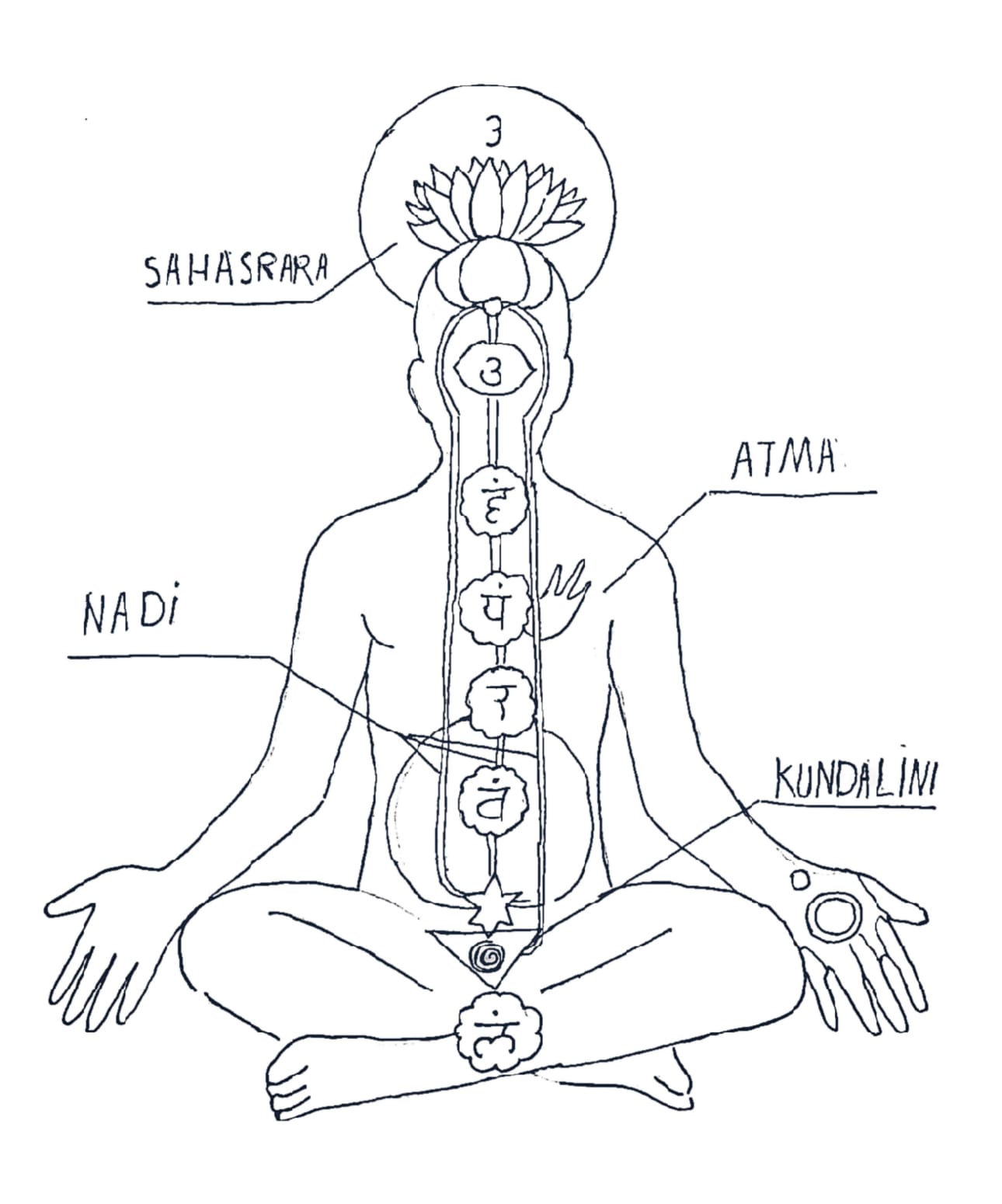
If we ponder the significance of the Serpent in relationship to the spine further, we might discover some more clues hidden in the far East. Through my research on this topic, I stumbled upon an ancient Hindu practice called Kundalini in which the Serpent is brought into direct association with the spine. Kundalini literally translates to “coiled snake” and is considered to be a divine energy which is located at the base of the spine. This divine energy lies dormant in the individual until it is brought to awakening through various forms of meditation and yoga. When this happens, the energy, symbolized by the Serpent, crawls up the spine, so to speak, until it reaches the top of the skull resulting in enlightenment. This bears a striking parallel to Numbers 21:4-9. Here too the raising of the Serpent upon a pole or cross-like structure, such as the spine, is brought into association with a higher form of consciousness.
What is especially interesting to notice here, is the weird medical phenomenon that occasionally manifests itself during the spontaneous awakening of Kundalini energy. That is, this spontaneous awakening of Kundalini energy could, in some cases, result in a psychosis. Apparently, this has occurred so frequently since Kundalini’s introduction to the West, that it has been labeled by psychiatrist as “Kundalini Syndrome”. Another important point of notice here, is that Kundalini energy is considered to be a feminine energy. One giant elephant in the room which we haven’t mentioned yet is the significance of Eve’s relationship to the Serpent. Besides Christ, it is Eve who is strongly tied to the Serpent, for it was She who was tempted by the Serpent first, not Adam. The association between the Feminine and the Serpent is therefore not simply one which we find in the teachings of Kundalini but can also be found back in Genesis itself. I shall return back to this important point at the end of this essay.
Returning back to Aion, Jung argues that the Serpent is such a neat symbol for the Redeemer because it symbolizes the “cold-blooded” inhuman contents of the psyche as well as its concretely animal nature. These “cold-blooded” inhuman contents of the psyche are a reference to the Logos, a theme I shall return to while discussing the doctrine of the Sethians. I request patience from my readers here.
Recap of the doctrine of the Perates
Through the equivocation with Christ, the Serpent functions as a symbol for the Self, who brings down the “signs of the Father” so that we may be awaked from our sleep and gain consciousness. Yet one must never forget that this equivocation is also paired with a strong Shadow quality. Apparently, there is something Serpent-like about the Self, something archaic and primitive. Something even potentially dangerous, wholly animal-like and unconscious. In a sense, the Self is much older and more primitive than the ego-oriented Cerebrum and strongly tied to or even found in the Cerebellum and Spinal cord. However, it is only through a confrontation with this Shadow aspect of the Self which allows us to find the Redeemer. Only by raising the Serpent from the dirt (unconsciousness) up to an elevated point (consciousness), such as is done in Kundalini or Numbers 21:4-9, can we gain its healing qualities. Therefore, the Serpent is both “as above so below”.
For the Perates, it is the Serpent which acts as the magnetic agent which pulls us in. Moses and the Bronze snake as depicted in Numbers 21:4-9.
3. Beliefs of the Gnostic sect of the Sethians
The third and final mentioning of the Magnet can be found in the doctrine of the Sethians. According to Jung, this doctrine bears a striking resemblance to the teachings of medieval Alchemy and expounds a similar theory of “composition and mixture”. Beliefs of the Sethian sect found in the Elenchus:
The ray of light from above mingles with the dark waters below in the form of a minute spark. At the death of an individual, and also at his figurative death as a mystical experience, the two substances unmix themselves. This mystical experience is the separatio and divisio.
Here it is interesting to notice how the element from above (the ray of light) mingles with the dark waters (the unconscious) from below. This is similar to the Serpent of the Perates who also comes from above to bring down the “signs of the Father”. However, it is important to note that the element from above mentioned here seems to be of a one-dimensional nature, that is, just one “ray of light” and therefore pure in its substance. This is in contrast to the Serpent who seems to have a dual nature as being both “the highest of the high” and “lowest of the low”. Either way, the union between above and below takes on “the form of a minute spark.” And apparently unmixes itself “At the death of an individual” be this a spiritual or a physical death. This implies that the two substances are mixed up with one another in the individual prior to their death. Which is obviously the case, for within every individual we can find this confused mixture of substances from below (the unconscious) and the substance from above (consciousness).
Jung writes here that, “The separation or unmixing is also what enables the alchemist to extract the Anima or spiritus from the Prima Materia.” Here we find the first of many strong parallels which Gnosticism shares with Alchemy. We know the Prima Materia from Alchemy as the ubiquitous, but also the ambiguous formless starting material required for the creation of the Lapis (Philosophers Stone). It can be thought of as a mixture of undifferentiated and opposing elements which requires a separation and discrimination of opposites in order for the Anima or spiritus to be extracted. The Prima Materia is also often compared to the Anima Mundi, also known as the “world soul”, and therefore, in theory, can be found in everything, anywhere and everywhere.
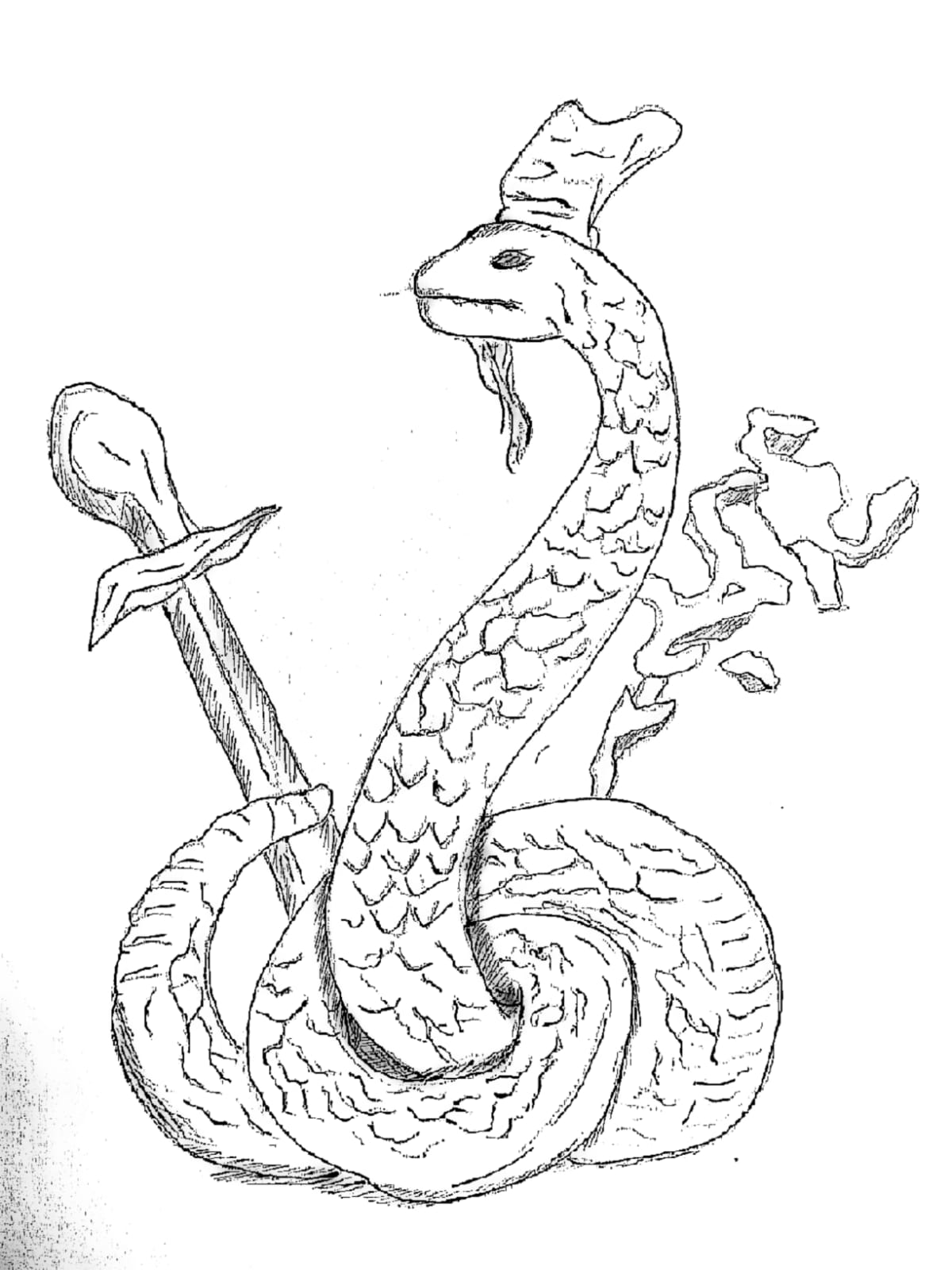
In Psychology and Alchemy, Jung will tell us that the Prima Materia is nothing more or less than the projection of the unconscious itself. The “Spiritus” referred to is Latin for “spirit” or “breath” and is considered to be analogous to the Anima (Latin for Soul). Notice here how the Spiritus (breath) comes from the mouth (fourth river of paradise) and is composed out of a gaseous water (the unconscious). It is also interesting to note how in Alchemy the Spiritus is often referred to as mercury (quicksilver) as a substance which has the ability to transform its structure rapidly. Of course, mercury is also a reference to the Roman deity Mercurius. Therefore, the process of unmixing the element from above (the ray of light) from the elements from below (the dark waters) found in the sect of the Sethians is quite similar, if not identical to, the process of the separatio and divisio in Alchemy. In which the confused, undifferentiated and opposing elements found in the Prima Materia are also briefly separated at the spiritual death of the individual and thereby freeing the Spiritus. For what is individuation but separating and identifying all that which is unconscious from that which is conscious. Beliefs of the Sethian sect found in the Elenchus: It is during this operation (the unmixing of the two substances) that the helpful Mercurius (Hermes) appears with the dividing Sword. It is in this manner that the Sethians interpret Christ’s message in Matthew 10:34: “I came not to send peace, but the Sword.”
Notice here the strong association Christ has with Mercurius. Just like Christ, Mercurius comes down from above and brings with him the dividing sword as a tool by which the separatio and divisio can commence. And just like the Serpent of the Perates, they both bring down the “signs of the Father” and spread his message. Afterall, this is the chief role of Mercurius, that of a messenger. For anyone vaguely familiar with some of the teachings of Alchemy, this equivocation should come as no surprise. For the Greek word “Herma” literally translates to “Stone” or “rock” and can therefore be considered a direct reference to the Lapis/Magnet. And of course, we find the word “Herma” back in the name of Hermes (just as often referred to by his Latin name as Mercurius) who was worshiped as the great God of the Alchemist.
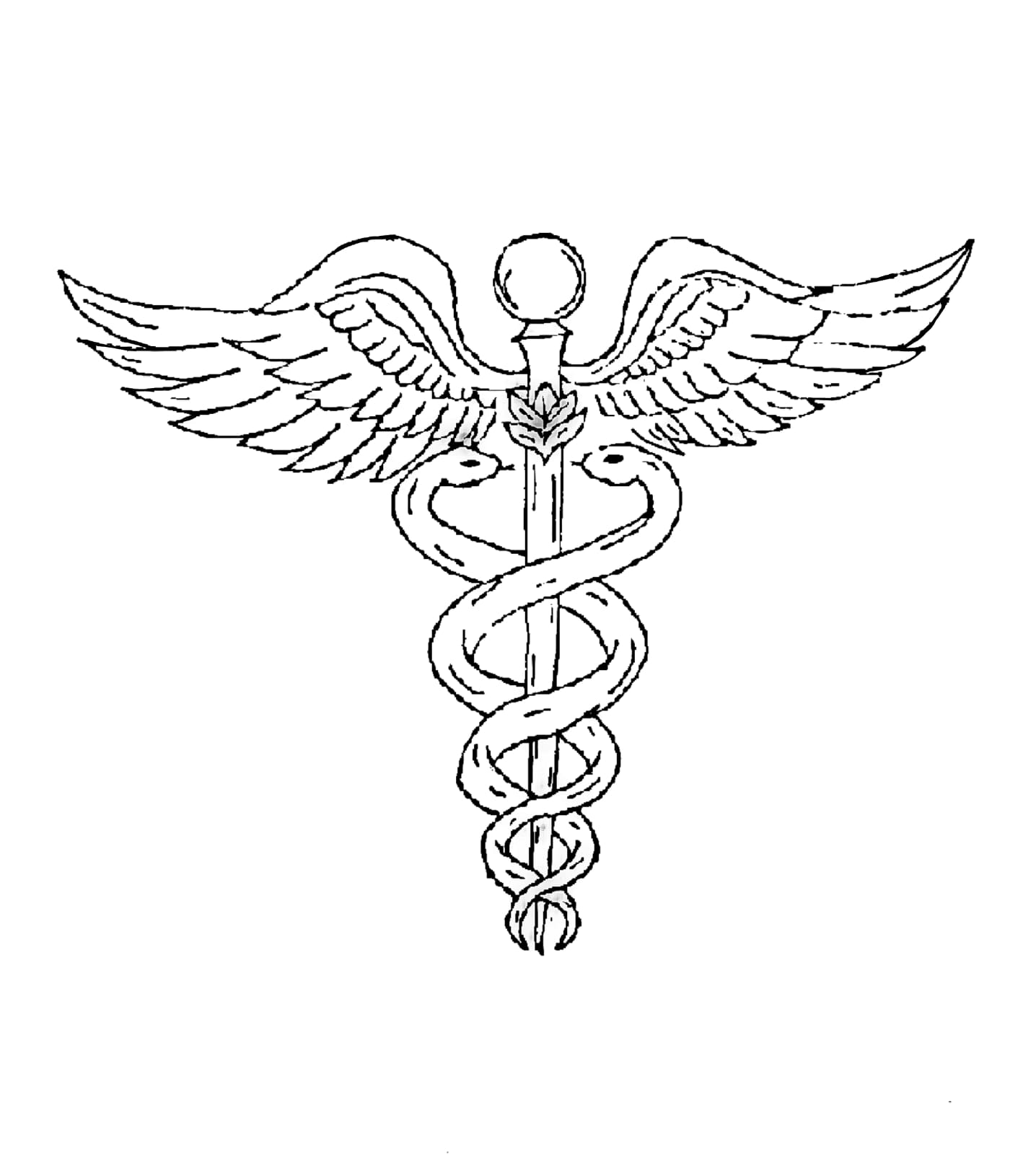
Another strong parallel between Hermes and Christ is the staff of Caduceus. This staff, held by Hermes in his left hand, is depicted as a staff entwined by two serpents. This brings us back to the symbolism of the Serpent in the sect of the Perates. Despite the fact that the Rod of Asclepius is more commonly used as a symbol for medicine, one can sometimes find the Caduceus used as a symbol for healing as well. Therefore, one can find yet again the strong association that the messenger from above has with the Serpent, the Stone and with the process of healing.
The staff of Hermes better known as the Caduceus. Notice how the Serpents crawling up the Staff is similar to the Serpent crawling up the spine in Kundalini.
Beliefs of the Sethian sect found in the Elenchus:
Having received its teaching through the unmixing and learning its proper place, the light/ spark retreats to the Logos which comes from above in the form of a slave… more quickly than Iron flies to the Magnet.
Here we find the third and final mentioning of the Magnet in the doctrine of the Gnostics. We already more or less knew what the “the dark waters below” was supposed to symbolize, that is, the contents of the unconscious. Now we finally know what the “ray of light from above” is supposed to refer to. Here the magnetic attraction comes from the Logos. The Logos denotes a thought or idea that has been formulated and articulated and is thus a product of consciousness. The “ray of light from above” is freed from its confused mixture with “the dark waters below” through the separatio and divisio and is now magnetically attracted to its origin, this origin is the Logos. Therefore, the contents of the unconscious are mixed up with the contents of consciousness within every individual and can be briefly separated during a spiritual death. This “spiritual death” is of course the death of the Ego who now realizes that it is no longer alone in what it believed to be its own house. The result of the unmixing is that what was previously mixed up with the other is now drawn to its own place, to that which is proper or akin to it. Like Iron to the Magnet.
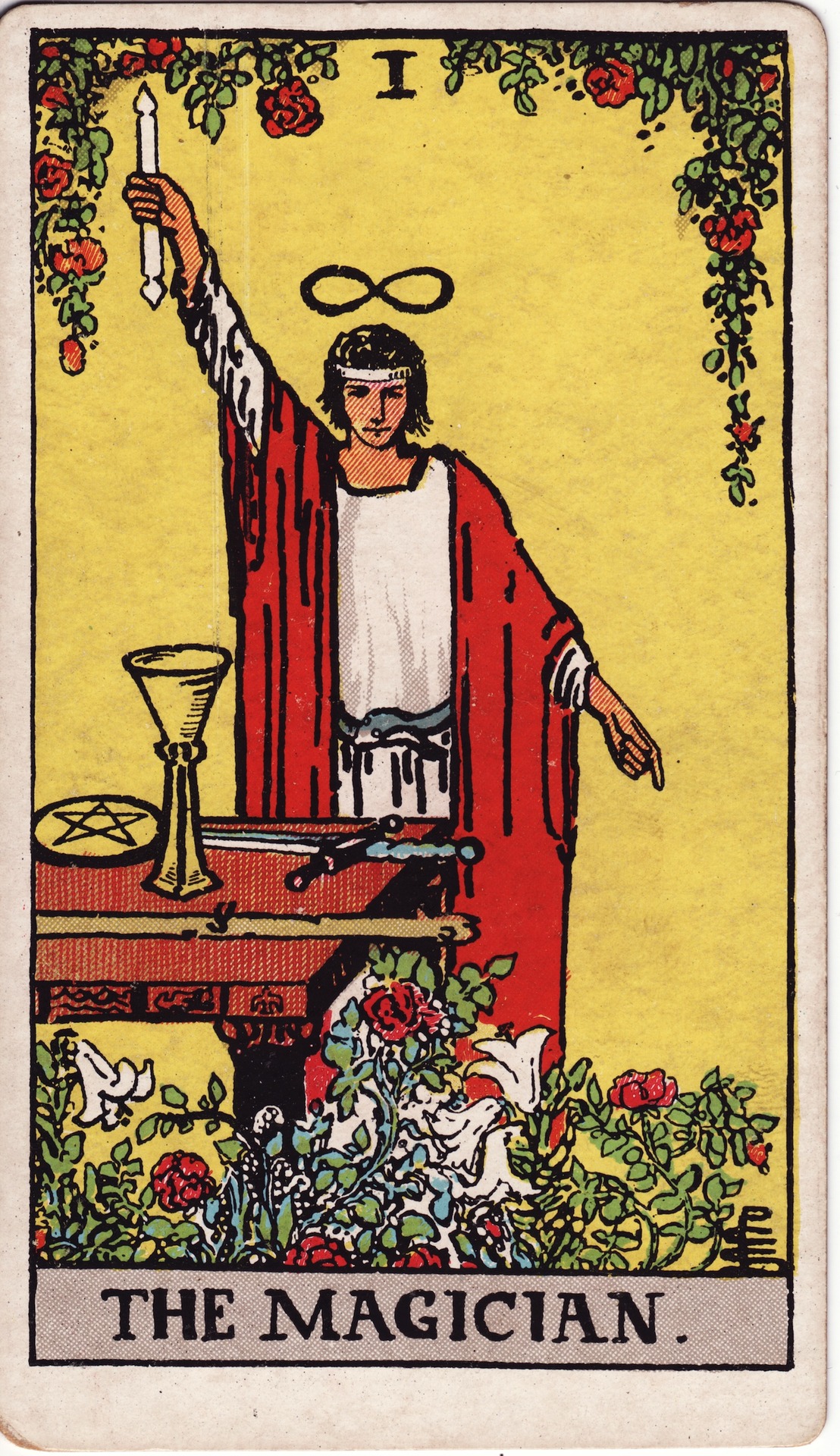
It is also important to note here that the “slave from above” mentioned, is obviously another reference to Hermes who in Greek mythology literally acts as the messenger/ slave of Zeus. We can think of Christ in similar terms. Even the Serpent of the Perates can be thought of as somehow being a servant of the Father; after all, it was he who carried the “signs of the Father” from above. This is what Jung means when referring to the Serpent as symbolizing the “cold-blooded” contents of the psyche as in paragraph 45, for it is he who brings the Logos, the “cold-blooded” intellectual product of consciousness.
Therefore, it is not just the contents of the unconscious which play an important role in the extraction of the Spiritus, but also that which comes from above as a product of consciousness, the Logos. However, this can only be achieved if the individual experiences a spiritual or physical death. This death is the death of the Ego. All three figures Christ, Hermes and the Serpent carry therefore a message send from above down to us here on earth. For it is us humans who stand in between the “the dark waters below” and the heavens above.
Summary of the doctrines of the Gnostic sects
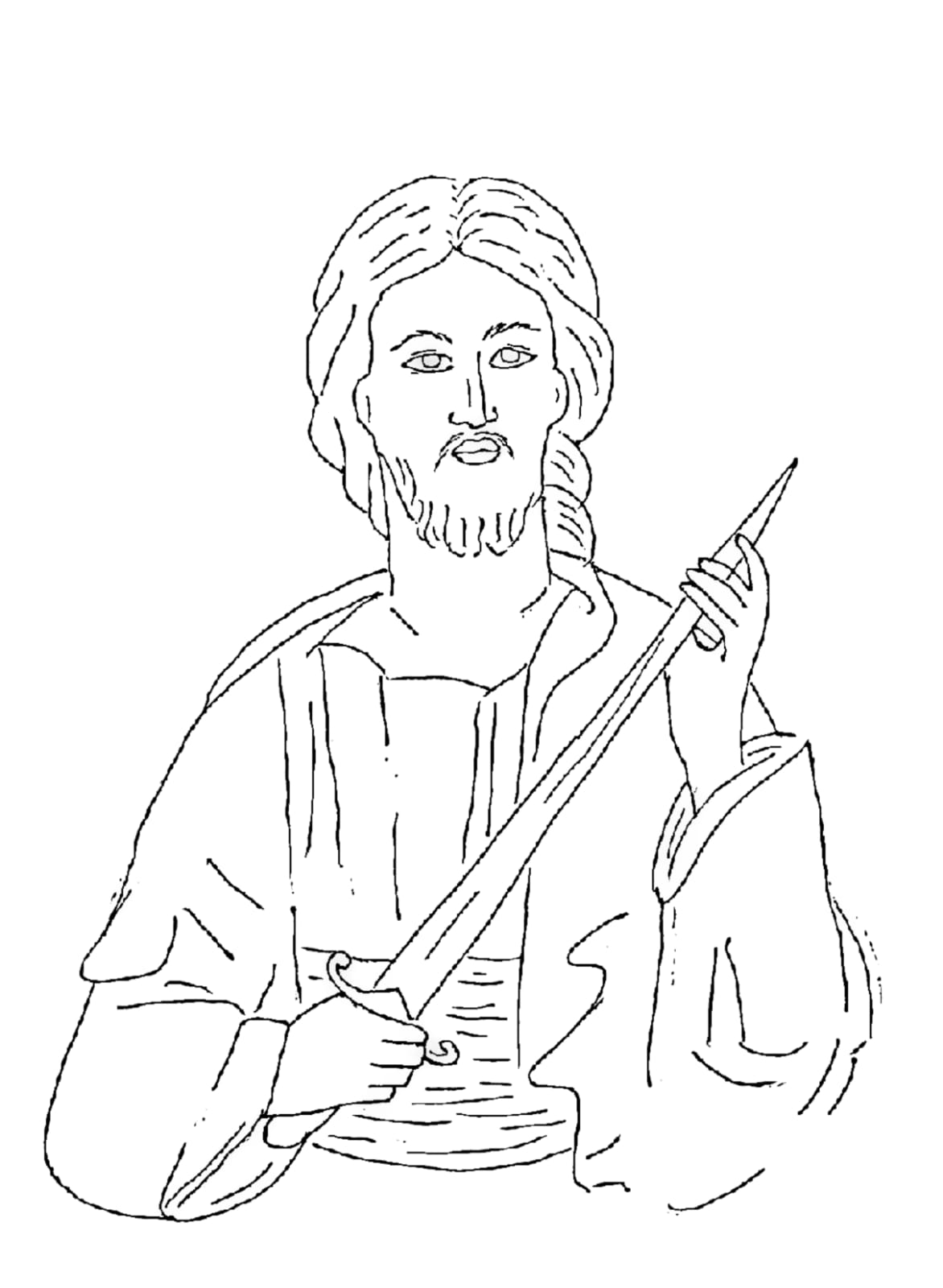
To recapitulate, through a Jungian lens we have attempted to carefully analyze and summarize the significance of the Magnet found in the doctrines of the three different Gnostic sects mentioned in the Elenchus. The Magnet, also referred to as the Stone, the Lapis, the Fish or the Serpent is that element which through attraction has the ability to draw from the depths of the unconscious all those elements which belong to us and are “proper” to our individual ground-plan (signs of the Father). This process is supposed to mirror the Individuation Process from a Jungian perspective. The doctrines are respectively;
- The significance of the Magnet found in the doctrine of the Naassenes: The magnetic agent is an inanimate and passive substance such as water dug up from the deep, handled by human hands and used according to man’s needs. Importance is laid on the ability of the individual to select and receive those elements which are “proper” or “fitting” to them. This is done through the “fourth river of paradise” which corresponds to the mouth. The mouth is significant, as it symbolizes the ability to, not just take in but also to let out. Therefore, the magnetic element in the doctrine of the Naassenes lays emphasis on self-expression as a crucial step towards wholeness. However, the mouth could also be understood as denoting the Logos. Here my reader is free to meditate on Aion and the doctrine of the Naassenes as they wish.
- The significance of the Magnet found in the doctrine of the Perates: The magnetic agent is an animate, living substance, the Serpent. It evokes surprise, curiosity and most of all, fear of all of that which is inhuman and sublime. It is the lowest and highest at once. That which can move between above and below. Here the Magnet which pulls us in also has a strong Shadow quality to it. Yet, it is exactly this confrontation with the most primitive, reptilian, monster-like element of the Self which allows for the healing process to take place. Jung says, “The snake is not an allegory or metaphor, for its own peculiar form is symbolic in itself, and it is important to note that the Son has the form of the snake and not the other way around: the snake does not signify the Son.”
- The significance of the Magnet found in the doctrine of the Sethians: The agent is the Logos. A philosophical idea and abstraction of the bodily and personal son of God on the one hand and the dynamic power of thoughts and words on the other. It is also that which allows for the separation and divisio and the extraction of the spiritus. However, it is crucial to keep in mind that this requires a “spiritual” death. This death is the death of the Ego. According to Jung, these three doctrines seek to describe the unknown essence of God. All of these symbols, Hermes, the Serpent, the Fish, water, Logos and the Magnet all existed long before Christ and were all trying to point towards the hidden and unknown element in mankind which Jung refers to as The Archetype of the Self. In other words, these three magnetic agents represent the prototypes of the Christ-Figure that were slumbering in man’s unconscious and were then called to wake by his actual historical appearance. This is what makes Gnosticism in particular so interesting, as Gnosticism incorporates a wide variety of already existing symbols borrowed from other believe systems and unified them into the symbol of Christ.
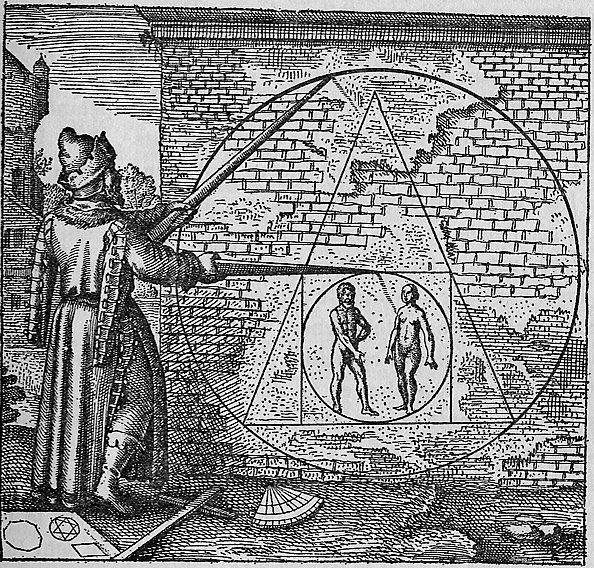
To add to this analysis, the thousand names of the Lapis Philosophorum, whether this be Magnet, stone, chalice etc. all correspond to the innumerable Gnostic designations for the Anthropos. The term Anthropos is Greek for “human” and was used as part of an expression in the original Greek New Testament, translating to “Son of man”. Interestingly enough, in Gnosticism, the term refers to both Adam and Christ.
Through my research, I found a bible verse that might have given rise to the equivocation between these two central biblical figures. Corinthians 15: 45-49 reads:
The first man Adam became a living being; the last Adam a life-giving spirit.
The spiritual, however, was not first, but the natural, and then the spiritual.
The first man was of the dust of the earth, the second man from heaven.
Here we see the very familiar theme of rebirth through the figures of Adam and Christ and how they both played a crucial role in the fall and rise of man. Adam is described here as coming from the dust and thereby coming from below (the unconscious) while Christ is literally referred to here as being the “second man” or “last Adam” and coming as a life-giving spirit from above (consciousness). Through this rebirth mankind has been infused with the message from above and can separate the strange mixture of opposites that lies within them in the form of a spiritual rebirth. Therefore, in Gnosticism the Anthropos is a single being who contains both the sin of Adam (unconsciousness) and the redemption of the Christ (consciousness). For Jung, the Anthropos is the greater more comprehensive man, that indescribable whole consisting of the sum of conscious and unconscious processes in a well-integrated form. This objective whole, this antithesis of the subjective ego-psyche, is what Jung calls the Self.
So, what to make of this strange symbolic journey we have been on? Besides the symbology of the individuation process and the discovery of the Archetype of the Self symbolized through Christ, there is one more dimension I would like to add to this essay. After having finalized and printed the first version of my essay in February 2026, I went back a few times to make the necessary adjustments and to further reflect on some of the strange themes found within this chapter. In particular, the symbolic significance of the Serpent as a redeemer and bringer of higher consciousness caught my attention. Of course, the Serpent is such a neat symbol for gained consciousness due to its dual nature which allows for Shadow projection on the one hand, and the bringer of the cold-blooded contents of consciousness on the other. However, what struck me as particularly interesting is the Serpent’s relationship to the spine and cerebellum.
It struck me that in all of the examples we have gone over the Serpent is always symbolized with a rod or pole-like structure, whether this be the rod of Asclepius, the Tree of the Knowledge Between Good and Evil in the Garden of Eden or the Caduceus of Hermes. If we take this symbolism to be the Serpent as an analogy for the lower part of our brains (the nervous system and cerebellum), then the Garden of Eden must be a metaphor for the Cerebrum. This is why the four rivers of paradise correspond to the 4 senses which are exclusively found in the head. It would also explain how the Serpent was able to creep into the Garden and whisper the secret into the ear of Eve. Because the Cerebrum and Cerebellum are attached to one another. This would mean that the whole Genesis story is one big analogy for the human body and the manner in which consciousness relates to it.
Returning back to the Elenchus, the magnetic process stipulated in the three doctrines covered, revolutionizes the Ego-oriented psyche by setting up, in contrast to the Ego, another goal or center which is characterized by all kinds of symbols. The Ego has been dethroned by a supraordinate authority and is now attracted to this higher personality which draws it in. It is as if a Copernican turn has taken place in which the Ego realizes that it is simply nothing more than the Earth evolving around the Sun. Though important, it can no longer take itself as the center of the universe. This then is the magnetic process described in the Elenchus and ultimately is supposed to symbolize the union between above and below. In other words, it is the Serpent, the Shadow, which ought to be incorporated into the ego. Only by raising the serpent which resides in us to consciousness can we, like Moses, gain access to its healing properties and can hopefully avoid meaningless suffering.
Before I finalize the formal part of this essay, I would like to briefly confess to my reader that I have only been able to cover the surface level symbolism to be found in these texts. One could literally write a whole book based on everything which I have left out. However, due to time constraints and other events taking place in my personal life right now, I have decided to leave it at this, for now, and hope that my reader finds themselves to be content. Just know that this is not the last you have heard of me and that much more is to follow. Afterall, we have only just begun our great adventure.
Afterword

Before finalizing this essay, I would like to make good on the promise which I havemade to my readers. As I have mentioned, one theme which we haven’t sufficiently addressed yet is the significance of Eve in relationship to the Serpent. Afterall, it was Eve, not Adam, who was first tempted by the Serpent andtook from his forbidden fruit. And it was Eve who achieved consciousness through the Serpent before Adam did. More so than Christ or Adam, it is Eve who is strongly associated with the Serpent. Unfortunately, it is also Eve whose role in Genesis has historically been undermined and demonized the most. Not coincidentally, the role of the Serpent in Genesis has suffered a similar fate.
One of the most well know paintings depicting Eve taking from the forbidden fruit of knowledge and tempting Adam to do the same. Here the Serpent is literally depicted as being the Devil. As mentioned earlier, there seems to be a strong Shadow quality attached to the Serpent as being a primitive, reptilian monster who either suffocates or poisons you. This Shadow quality and its negative connotations has persisted throughout time without the accompanying positive traits. This is despite the guidance and advice which we were given in Numbers 21:4-9 and John 3:14 which tell us that there exists a healing and even a divine quality hidden in the Serpent as long as one is willing to raise him up high. This brings us back to the paradox of the Serpent being both the “lowest of the low” and “highest of the high”. This “raising of the Serpent” translates to nothing more than a confrontation and integration of the Shadow. It is only through confronting that which bites and strangles you, and then through raising that very thing to an elevated position which allows for the healing process to commence.
However, the Serpent in Genesis is somewhat different from the Serpent in Numbers 21:4-9, for the Serpent in Genesis doesn’t bring us healing per se but consciousness. Afterall, the paradise from which Eve and Adam were expelled from was the paradise of cnconsciousness. Genesis 3: 4-5 literally reads:
But the serpent said to the woman, “You will not surely die. For God knows that when you eat of it [the forbidden Fruit, FvP]your eyes will be opened, and you will be like God, knowing good and evil.
This “opening of the eyes” and the gaining of the knowledge between good and evil equates to gained consciousness. Jung himself claims that within the realm of the unconscious all moral considerations such as “good’’ an “evil” simply do not exists.
The Gnostics figured all this out quite early and realized that it is only through the Serpent that one gains access to the Redeemer. This, they say, is what is meant by the saying, “I am the Door”. The Naassenes and Ophites even go so far as to claim that the Serpent is the messenger and servant of Sophia (many Gnostic sects consider Sophia to be the highest or superior God) who comes down to save souls trapped in the horrible world of materialism. Here too, the Serpent acts as a redeemer, not as a deceiver. Yet it seems like we have either forgotten or never truly understood this vital lesson. We continue to demonize the primitive, unconscious aspects of our psyche, some even deny its existence, most deny its significance. We continue to project our Shadows onto the Serpent and unfortunately, we still project it onto Eve.
As much as I would like to continue my train of thought on this subject, I must conclude this essay. For otherwise I will go insane (as far as that hasn’t already happened). Perhaps this will be the starting point for a future essay on Genesis. But for now, I thank my reader for their patience and attention. Perhaps we shall meet again someday, but for now I shall retrieve myself, for I have spoken too much and besides, I have made dinner reservations with an old friend.
Noten
[1] Source in the Public Domain of an Aion Mosaic. Terra (Tellus Mater) reclining with the Seasons, accompanied by Aion-Uranus within a zodiac wheel. Mosaic from a Roman villa in Sentinum, 200-250 CE. Glyptothek, Munich (Inv. W504): “Central part of a large floor mosaic, from a Roman villa in Sentinum (now known as Sassoferrato, in Marche, Italy), ca. 200–250 C.E. Aion, the god of eternity, is standing inside a celestial sphere decorated with zodiac signs. Sitting in front of him is the mother-earth goddess, Tellus (the Roman counterpart of Gaia) with her four children, who possibly represent the four seasons.
Upload data 2007, Source/Photographer User:Bibi Saint-Pol, own work, 2007-02-08
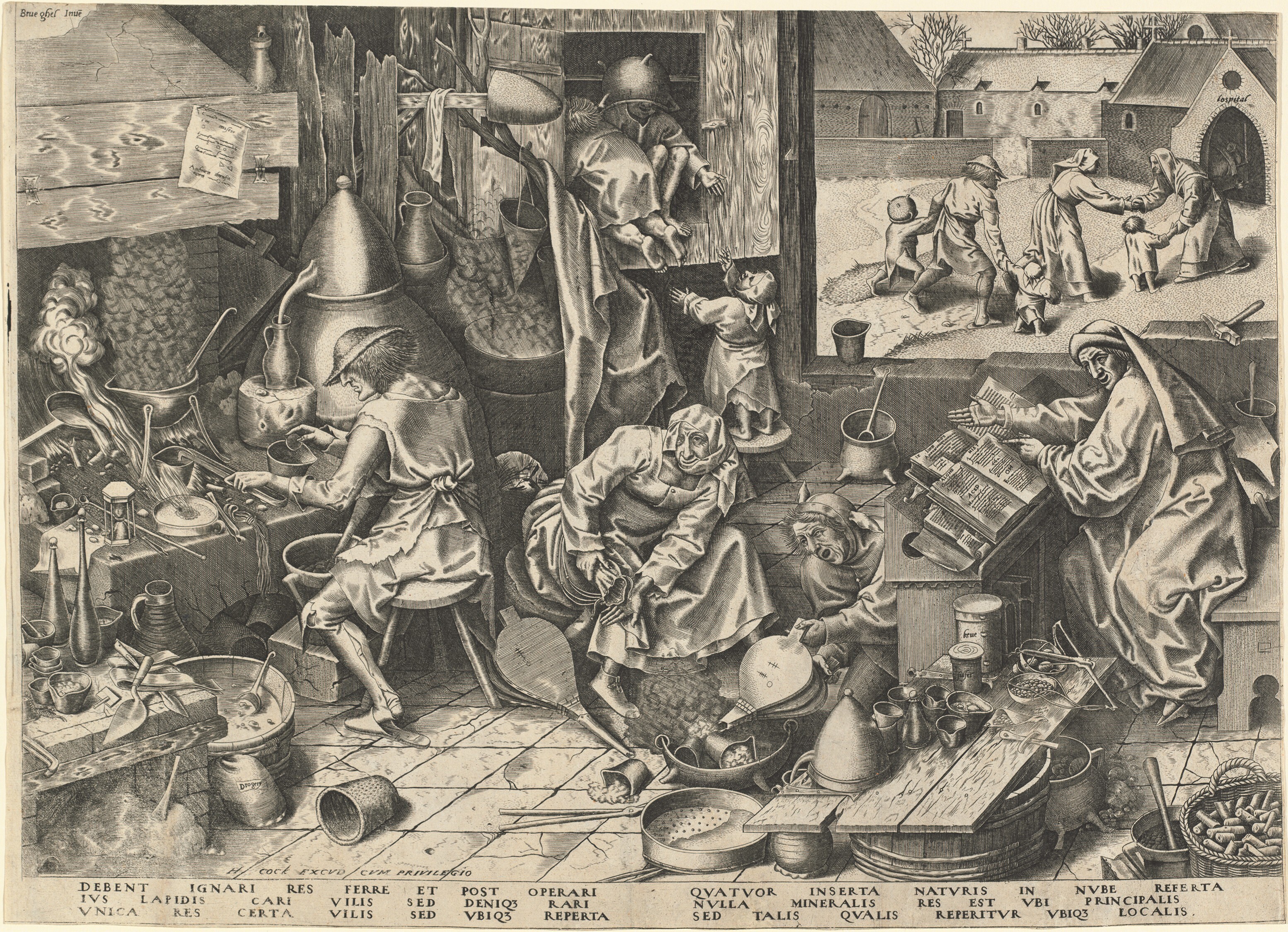
[2] Source in the Public Domain: De Alchemist getekend door Pieter Bruegel de Oudere (1558, Inkt op papier). Gegraveerd Philipp Galle. Bron: bron: National Gallery of Art, Washington, DC, US. Upload date 2015 door Patrick87 .
[3] Read more about the Elenchus.
[4] The usage of the term Catholic referrers to the early Christian church that adhered to an orthodox interpretation of the Apostolic Teachings located in Rome. This should not be taken to be “Catholic” as we understand it today. Keep in mind that at the time there were numerous centers of Christianity which all had their own interpretations of the Apostolic Teachings.
[5] Source in the Public Domain of The Four Rivers flowing from the Arch of Paradise Pishon, Gihon, Tigris (also referred to as Hiddekel) and Euphrates as depicted in a 12th century manuscript by Meister der Predigten des Mönchs Johannes Kokkinobaphos “Predigtsammlungen des Mönchs Johannes von Kokkinobaphos über die Jungfrau Maria, Szene: Das Paradies, die vier Paradiesflüsse und die Paradiespforte”. 12th century.
Bibliothèque Nationale Paris. Upload date 20 mei 2005: Source/Photographer The Yorck Project (2002) 10.000 Meisterwerke der Malerei (DVD-ROM), distributed by DIRECTMEDIA Publishing GmbH. ISBN: 3936122202.
[6] Source in the Public Domain of “Moses striking water from stone“, as in Exodus 17;6. Ets van Casper Luyken in: Flavius Josephus (auteur), Datering: 1698. Verworven door schenking in 1907, Luyken collectie, Amsterdam Museum. Source: http://hdl.handle.net/11259/collection.57595 Upload date 15 feb 2020 by Mr.Nostalgic.
[7] One of the fun things about reading Jung, is that, instead of an extensive elaboration on the symbolic themes, Jung decides to summarize the entire doctrine of the Naassenes in a single sentence; “the doctrine is the magnet that makes possible the integration of man as well as the lapis.” Leaving us with the fun work of analyzing the majority of the text on our own.
[8] For those unfamiliar, naphtha is nothing more than a flammable oil.
[9] Illustration in the Public Domain of the Magician, Tarot Card, “Pam-A” tarot card from the Rider–Waite Tarot deck. Datum 1910. Bron http://muzendo.jp/blog/
Auteur Pamela Colman Smith (1878–1951) Note Pamela Colman Smith was the artist and worked as an artist ‘for hire.’ She was not acknowledged as the author of the work. Arthur Edward Waite was the copyright holder and he died in 1942. Upload date 18 apr 2026 fotograaf, Nosferattus.
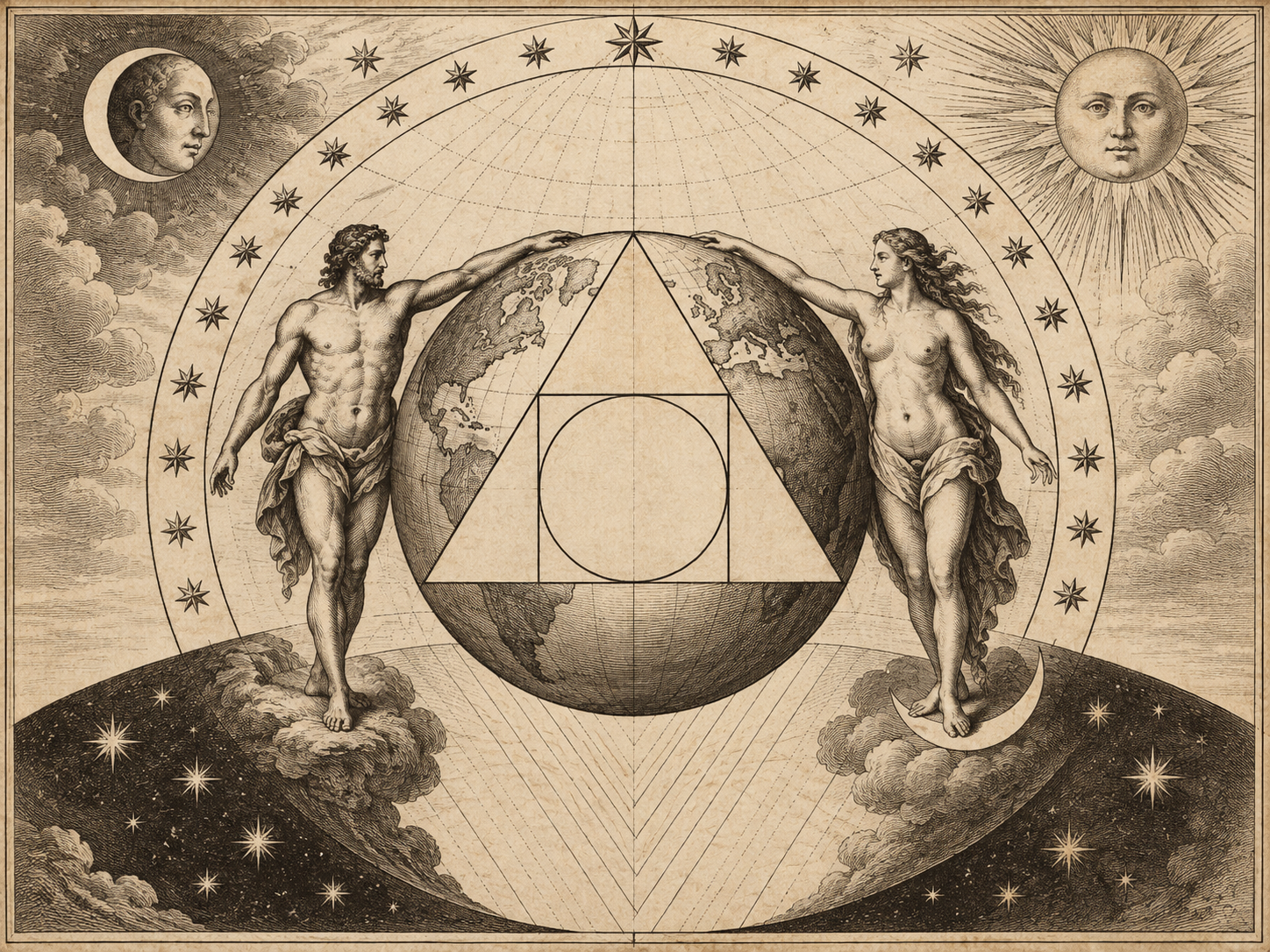
[10] Source in the Public Domain of the Philosopher’s Stone, Emblem 21: Of the secrets of Nature; Make a circle out of the sea and the woman, then a square, then a triangle, make a circle and you will have the Philosopher’s Stone.
p.93 text: Emblema XXI. De secretis Natura, Author Michael Maier: “Fac ex mare & foemina circulum, inde quadrangulum, hine triangulum, fac circulum & habebis lapis Philosophorum.
Foemina masque unus fiant tibi circulus, ex quo Surgat, habens aquum forma quadrata latus. Hinc Trigonum ducas, omni qui parte rotundam. In spharam redeat: Tum Lapis ortus erit. Sires tanta tua non mox venit obvia menti, Dogma Geometra sicapis, omnescies”. Date 1617. Source Atalanta Fugiens.
Upload photo by Hadrien on 23 jan 2008.
[11]Source in the Public Domain of “De Zondeval”, olieverf schilderij uit 1592 door Cornelis Cornelisz. van Haarlem (1562–1638). Collectie Rijksmuseum Amsterdam. Bron/fotograaf Web Gallery of Art. Upload date 21 april 2026 door Jdsteakley.


